Shopping for a new car stereo or head unit and keep seeing “single DIN” or “double DIN” in the specs? The terminology trips up a lot of people who just want to know whether a radio will fit their dash.
DIN stands for Deutsches Institut für Normung, which translates to the German Institute for Standardization. In the context of car audio, DIN refers to a standardized mounting slot size for head units. A single DIN measures 2 inches tall by 7 inches wide (50mm × 180mm). A double DIN is exactly twice that height at 4 inches tall, with the same width. These dimensions determine which radios physically fit your vehicle’s dashboard opening.
The German Standard That Became a Global Car Audio Rule
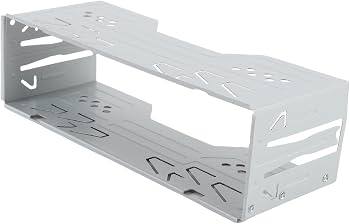
The DIN standard for car radios was established in 1984. German automakers, led largely by the influence of manufacturers like Volkswagen and Mercedes-Benz, needed a universal specification so that head units could be swapped between vehicles without requiring custom fabrication.
The standard caught on globally almost immediately. By the late 1980s and early 1990s, most Japanese and American automakers had adopted compatible dash openings. Today, DIN dimensions are recognized across the automotive industry worldwide, even though a variety of proprietary dash formats from some manufacturers have complicated the landscape.
The organization behind this standard, DIN (Deutsches Institut für Normung), sets technical and safety standards across multiple industries — not just automotive. Their automotive radio standard is formally known as DIN 75490, though most people simply say “DIN” when talking about radio slot sizes.
Single DIN vs. Double DIN: What the Difference Means Practically
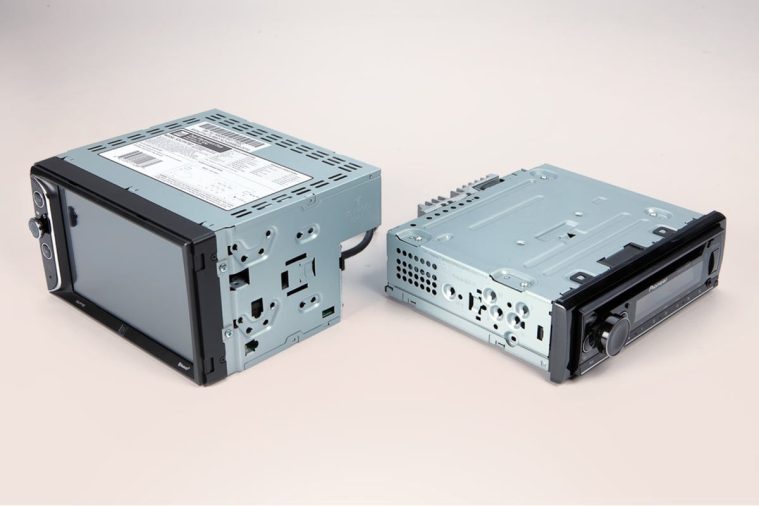
The most important distinction for any car audio upgrade is whether your vehicle has a single DIN or double DIN opening.
| Specification | Single DIN | Double DIN |
|---|---|---|
| Height | 2 inches (50mm) | 4 inches (100mm) |
| Width | 7 inches (180mm) | 7 inches (180mm) |
| Common display type | Small LCD or no screen | Large touchscreen |
| Typical use case | Basic stereos, CD players | Navigation, Apple CarPlay, Android Auto |
| Vehicle compatibility | Older vehicles, trucks, many sedans | Newer vehicles, late-model SUVs |
Single DIN units are still widely available and popular in trucks, older vehicles, and builds where a large touchscreen isn’t the goal. Double DIN units have become the dominant choice for drivers who want a touchscreen, built-in navigation, or smartphone integration through Apple CarPlay or Android Auto.
The width of both formats is identical — 7 inches. That’s by design, since the DIN standard was built around a consistent horizontal slot width. Only the height changes.
How to Tell Which DIN Size Your Vehicle Has
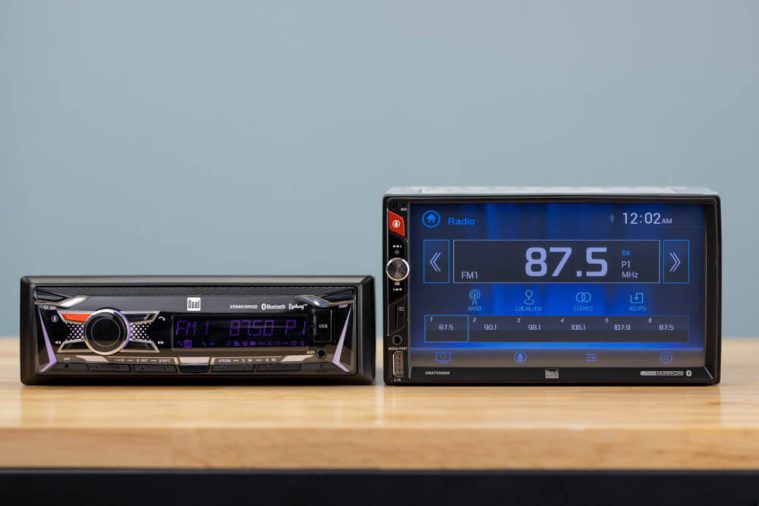
Checking your dash opening before buying a new head unit saves a lot of frustration. Here’s a straightforward way to identify your format:
- Look at your current radio. If the face of the unit is roughly the size of a standard cassette deck or basic CD player, it’s likely single DIN. If it has a tall touchscreen or DVD-sized display, it’s double DIN.
- Measure the opening. With the head unit removed or while eyeballing the dash cavity, measure the height of the rectangular opening. Approximately 2 inches means single DIN; approximately 4 inches means double DIN.
- Check a vehicle fitment guide. Most aftermarket radio manufacturers provide online compatibility databases where you enter your year, make, and model to confirm which DIN size fits and whether an adapter or mounting kit is required.
Many vehicles originally built with a single DIN opening can accept a double DIN unit if a dash kit or bezel adapter is used. The reverse — fitting a single DIN unit into a double DIN opening — is also possible with the right trim panel, though the result often leaves a storage pocket or blank panel in the unused lower space.
Why Fitment Is More Complicated Than Just DIN Size
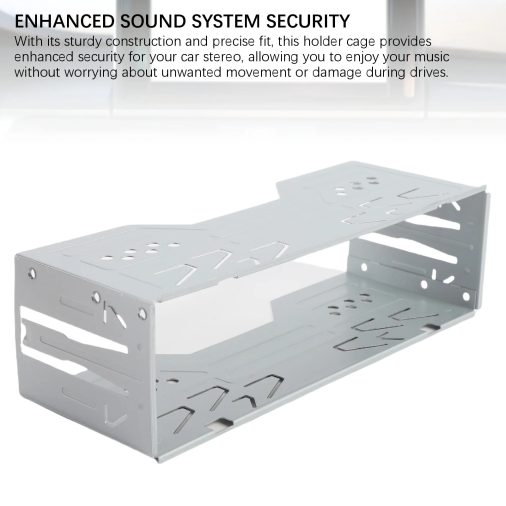
The DIN standard covers the mounting slot dimensions, but it doesn’t address everything involved in a real installation. Several other factors affect whether a specific head unit will actually work in your vehicle:
Wiring harness compatibility. Every vehicle uses a specific connector for the radio. Aftermarket head units use a universal connector that typically doesn’t match the factory plug directly. Wiring harness adapters — such as the Metra 70-series harness adapters — are widely available and allow you to connect a new head unit to your vehicle’s existing wiring without cutting factory wires.
Antenna adapter. Most vehicles use an ISO-standard antenna plug or a Motorola-style plug. Some require a simple adapter to connect to the aftermarket head unit’s antenna input.
Steering wheel controls. Many late-model vehicles have audio controls on the steering wheel. Keeping these functional after a head unit swap usually requires a separate steering wheel control interface module.
Depth clearance. The DIN standard addresses the face opening but not the depth of the unit behind the dash. Some vehicles — especially compact cars and certain trucks — have limited depth behind the radio cavity. Head unit specifications always include chassis depth, and that measurement should be checked against available space before purchasing.
Factory-integrated systems. Some vehicles tie the radio into the climate control display, backup camera, parking sensors, or other systems. In these cases, a standard DIN head unit replacement may disable those features unless vehicle-specific integration harnesses are used.
Vehicles That Don’t Use Standard DIN Sizing
Not every vehicle follows the DIN format. Some manufacturers have designed proprietary dash layouts that don’t accommodate standard aftermarket head units at all — at least not without significant modification.
Common examples include:
- Many modern Ford, GM, FCA, and Toyota vehicles with large factory infotainment screens integrated into the dashboard architecture
- Some European vehicles like Audi, BMW, and Mercedes-Benz that use proprietary mounting systems and deeply integrated electronics
- Tesla vehicles, which use a manufacturer-specific touchscreen system with no standard DIN opening
In these cases, aftermarket options typically include dash kits specifically engineered for that vehicle, or alternatives like adding an aftermarket display through other mounting solutions. Always research your specific vehicle before assuming a standard DIN head unit will drop in.
1.5 DIN: The Less Common Middle Format
A third format — sometimes called 1.5 DIN — exists and is occasionally seen in older Japanese vehicles, particularly some Honda, Mitsubishi, and Isuzu models from the 1980s through early 2000s. This format falls between single and double DIN in height.
Aftermarket support for 1.5 DIN is limited. In most cases, owners convert the opening to accept a single or double DIN unit using a purpose-built dash kit.
Installing an Aftermarket DIN Radio: What the Process Involves
A standard DIN head unit swap is one of the more approachable DIY car audio jobs for someone comfortable with basic electrical work. A general overview of the process:
- Disconnect the negative battery terminal before touching any wiring.
- Remove the factory radio using the appropriate trim removal tools to avoid cracking the dash panels. Many radios are secured with hidden clips, screws behind trim pieces, or DIN release keys — thin metal tools that slide into slots on the sides of the radio face to release spring clips.
- Connect the wiring harness adapter to the factory plug, then connect the adapter’s other end to the aftermarket head unit’s harness.
- Connect the antenna adapter if needed.
- Test the unit before finalizing installation by briefly reconnecting the battery and powering on the head unit.
- Seat the unit into the dash and reinstall any trim panels.
This is a simplified overview. Vehicles with factory-amplified audio systems, steering wheel controls, or integrated electronics require additional steps and components. When the installation involves complex integration, professional installation is a reasonable choice.
FAQ
What does DIN stand for when buying a car stereo?
DIN stands for Deutsches Institut für Normung, the German Institute for Standardization. In car audio, it refers to a standardized mounting slot size for head units. A single DIN opening is 2 inches tall by 7 inches wide. A double DIN opening is 4 inches tall by 7 inches wide. These dimensions determine whether an aftermarket head unit will physically fit a vehicle’s dashboard.
How do I know if my car has a single DIN or double DIN radio slot?
The easiest method is measuring the height of the current radio’s face or the dashboard opening. A face height of roughly 2 inches indicates single DIN. Roughly 4 inches indicates double DIN. You can also look up your vehicle’s year, make, and model in an aftermarket radio compatibility guide, which most head unit manufacturers provide on their websites.
Can I put a double DIN radio in a single DIN slot?
Not directly — a double DIN unit is twice the height and won’t fit into a standard single DIN opening without modification. However, many vehicles with a single DIN opening can be converted using a dash kit that enlarges the opening or provides a compatible bezel. This is a common upgrade path, particularly in trucks and older sedans where drivers want a touchscreen unit.
Do all cars use the DIN radio standard?
Most vehicles sold through the 1980s, 1990s, and 2000s use standard single or double DIN openings. However, many modern vehicles — particularly those with large factory-integrated infotainment systems from brands like BMW, Audi, Toyota, and General Motors — use proprietary dash designs that don’t accommodate standard DIN head units without specialized adapters or significant modification.
What tools do I need to remove a DIN radio from a car?
Common tools include DIN removal keys (also called release keys or radio removal tools) for radios held in by spring clips, a set of plastic trim pry tools to remove dash panels without damage, a wire harness adapter matching your vehicle, and basic hand tools. For vehicles using screw-mounted radios behind trim panels, a Phillips or Torx screwdriver is typically needed.
What is a DIN release key and when do I need one?
A DIN release key is a narrow metal tool — typically sold in pairs — that slides into small slots on either side of a DIN-style head unit. Pressing the keys inward releases internal spring clips, allowing the radio to slide straight out of the dash. Not all radios use this method; some are held in by screws. Older European vehicles and many factory head units from the 1980s and 1990s frequently use the spring-clip DIN release system.
Does DIN size affect sound quality?
The DIN standard only addresses physical mounting dimensions — it has no bearing on audio performance. Sound quality depends on the head unit’s electronics, amplifier output, supported audio formats, and the overall speaker system in the vehicle. Choosing between single and double DIN is purely a matter of available dash space and feature preferences, such as whether a touchscreen or navigation display is desired.
The DIN standard simplifies car audio upgrades by establishing predictable mounting dimensions that have held up across decades of vehicle production. Knowing whether your vehicle has a single or double DIN opening — and understanding the wiring, depth, and integration factors that go beyond the slot size — is the foundation of a successful head unit installation.