NVX amplifiers come up often in car audio forums and budget build discussions. If you’re planning a system upgrade and wondering whether NVX is worth the money before you pull the trigger, here’s what the brand actually delivers.
NVX is generally considered a solid mid-budget car amplifier brand that offers reliable performance for the price. Their amplifiers are well-regarded for clean power output, reasonable build quality, and compatibility with most 12V vehicle electrical systems. They’re not high-end reference-grade hardware, but for daily drivers and entry-to-mid-level audio builds, NVX competes well against similarly priced competitors.
What NVX Actually Is as a Brand
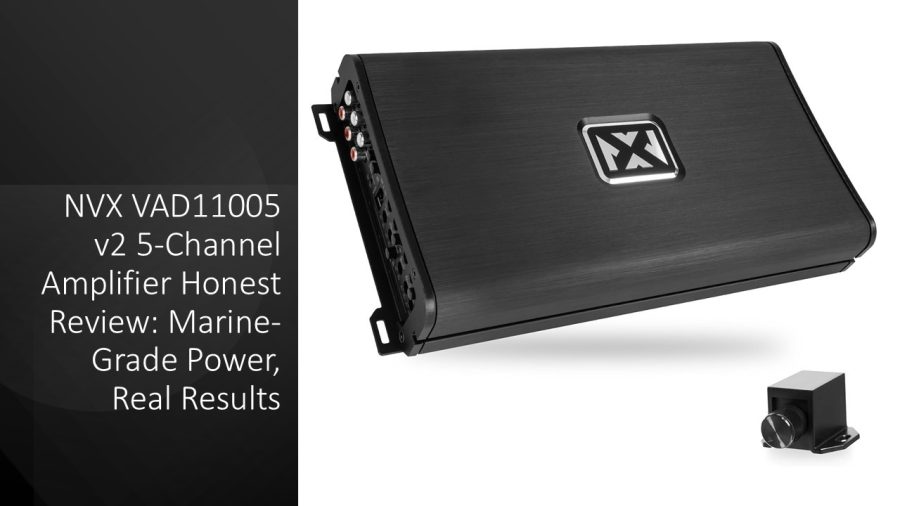
NVX is an American car audio brand that positions itself in the mid-range market, offering amplifiers, subwoofers, speakers, and installation accessories. The brand is not a boutique manufacturer, but it’s also not a throwaway no-name label. NVX products are sold through authorized car audio retailers and online channels, and the brand maintains a reasonable warranty and customer support presence.
Their amplifier lineup spans mono subwoofer amps, multi-channel full-range amps, and competition-style units with higher power ratings. Most NVX amplifiers are rated using RMS power figures, which is the measurement that actually matters for real-world listening levels.
How NVX Amplifiers Perform in Real-World Installs
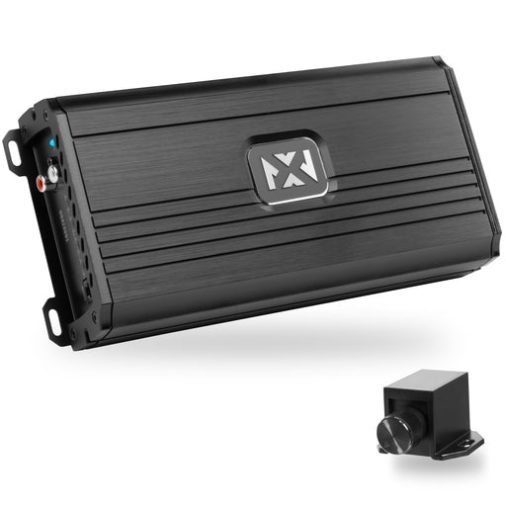
One thing that frequently comes up in owner discussions is that NVX amplifiers tend to run reasonably close to their rated power output. This matters because many budget amplifiers inflate their peak wattage claims while delivering significantly less RMS power under load.
In practice, owners report that NVX amps produce clean audio at moderate to high volumes without noticeable thermal shutdown issues in properly ventilated installations. The signal-to-noise ratio and total harmonic distortion specs on most NVX models are competitive for the price bracket.
That said, NVX amplifiers perform best when the rest of the system is properly matched. Running an underpowered head unit signal into an NVX amp, or pairing an amp with a poorly matched subwoofer, will limit results regardless of the amplifier’s quality.
NVX Amplifier Product Lines Worth Knowing
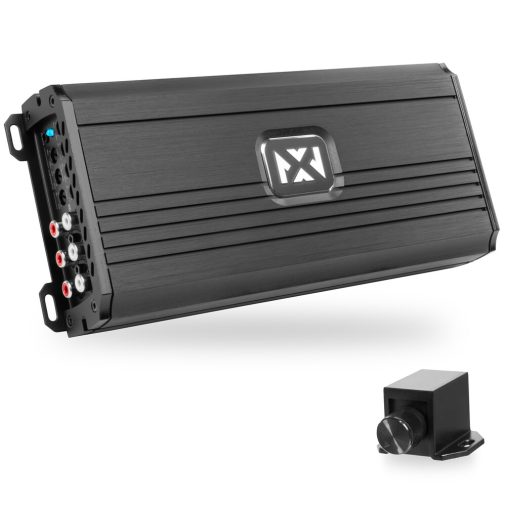
NVX organizes their amplifiers into several lines. The most commonly discussed are:
- NVX JAD Series — entry-level mono and multi-channel amps aimed at budget builders
- NVX VAD Series — a step up in build quality and power headroom, popular for mid-range builds
- NVX XAD Series — competition-oriented units with higher power density and more aggressive tuning flexibility
The VAD series tends to receive the most consistent positive feedback for everyday builds, particularly the mono versions paired with single subwoofer enclosures. The XAD series appeals to enthusiasts who want more tuning control, including subsonic filter adjustments and higher sensitivity input ranges.
If you’re comparing options, the NVX VAD1200.1 is one of the more frequently referenced models in the brand’s mono lineup.
Honest Build Quality Assessment
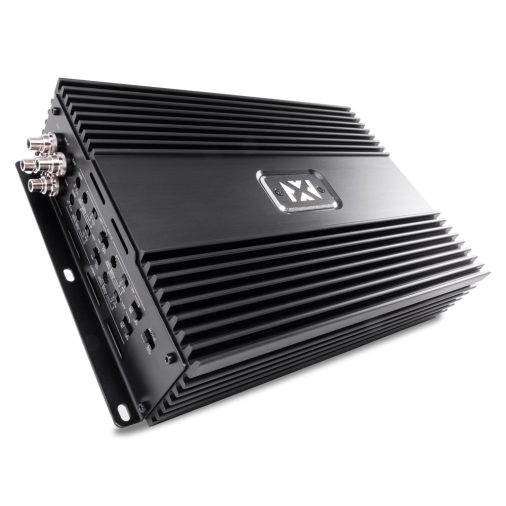
NVX amplifiers use standard Class D topology for their mono subwoofer units and Class AB or Class D for multi-channel models. The internal components are typical of the mid-range tier — not premium audiophile-grade parts, but not the cheapest available either.
The chassis construction is generally solid. Heatsink design is adequate for normal listening conditions, though extended high-volume use in a tightly enclosed trunk can cause thermal limiting if airflow is restricted. This is a common limitation across the mid-budget amplifier category, not unique to NVX.
Terminal blocks on most NVX amplifiers accept standard power and speaker wire gauges and are labeled clearly, which matters during installation. The gain, bass boost, and crossover controls are reasonably accessible and respond predictably when adjusted.
How NVX Compares to Similar Brands
| Brand | Price Tier | Power Accuracy | Build Quality | Best For |
|---|---|---|---|---|
| NVX | Mid-budget | Good | Solid | Daily drivers, budget builds |
| Rockford Fosgate | Mid to premium | Very good | High | Enthusiasts, long-term installs |
| Skar Audio | Budget to mid | Good | Comparable to NVX | Value-focused builds |
| Alpine | Mid to premium | Very good | High | OEM upgrades, sound quality |
| Planet Audio | Budget | Fair | Basic | Very tight budgets only |
NVX fits naturally between the budget tier (Planet Audio, Boss) and the established premium names (Rockford Fosgate, Alpine). Skar Audio is probably the most frequently compared alternative at similar prices, and the two brands are competitive in performance for comparable wattage ratings.
The decision often comes down to which specific models are on sale, what your subwoofer or speaker impedance is, and how much RMS power you actually need for your enclosure type.
Installation Considerations for Any Vehicle
NVX amplifiers are standard 12V automotive units and are compatible with virtually any passenger vehicle, truck, or SUV that uses a conventional automotive electrical system. However, a few practical points are worth noting before install:
- Verify your alternator output. A high-powered amplifier on a weak charging system will cause voltage sag and poor sound quality. Vehicles with smaller alternators (typically under 100A) may need an upgrade or a capacitor buffer if you’re running a high-wattage amp.
- Check available mounting space. NVX amps in the higher wattage classes can be physically large. Measure your trunk, under-seat area, or enclosure mounting surface before ordering.
- Use the correct wire gauge. Most NVX amplifiers specify 4-gauge or 8-gauge power wire depending on the model’s current draw. Using undersized wire creates resistance, voltage drop, and potential heat hazards.
When working with electrical wiring in your vehicle, always disconnect the negative battery terminal before running power cables. Use an inline fuse near the battery and never rely solely on the amplifier’s internal protection.
Common Complaints and Known Limitations
No amplifier brand at this price tier is without trade-offs. Commonly reported concerns with NVX amplifiers include:
- Customer service response times — some owners report slower-than-expected warranty claim resolution
- Bass boost circuit — NVX amplifiers with bass boost engaged can introduce distortion if set too high, which is typical across most amplifiers in this class
- Protection mode triggering — in installations with marginal wiring or heavily clipped input signals, some units enter protection mode more readily than competitors
Most of these issues are solvable through proper installation practices rather than being fundamental product defects. Clipping the input signal from a head unit, undersized power wiring, and inadequate ventilation are the three most common causes of amplifier problems across all brands.
Who Should Consider NVX and Who Should Look Elsewhere
NVX amplifiers make the most sense for:
- Daily drivers looking for a genuine audio upgrade without spending premium amplifier money
- First car audio builds where installation experience is being developed
- Budget-conscious system builders who want actual RMS power rather than inflated peak ratings
- Vehicles where space constraints require a compact form factor
NVX is probably not the ideal choice if you’re building a competition-level sound quality system, want a long-term reference-grade install, or need a warranty process that moves quickly. In those cases, stepping up to Rockford Fosgate, JL Audio, or Alpine is a more defensible investment even at higher cost.
FAQ
Is NVX a reliable car amplifier brand for daily use?
NVX amplifiers are considered reliable for daily use when installed correctly. Proper wiring gauge, adequate ventilation, and a matched speaker load keep most NVX units running without issues over extended periods. Owners who follow basic installation best practices generally report consistent performance, though the brand doesn’t carry the same long-term reputation as premium names like Rockford Fosgate or JL Audio.
How does NVX compare to Skar Audio amplifiers at the same price?
NVX and Skar Audio are frequently compared at similar price points and perform comparably in most real-world installs. NVX tends to have a slightly more conservative power rating approach, which some owners interpret as more honest RMS output. Skar often offers higher peak wattage claims for the price. Both brands are solid choices; the better option often depends on specific model availability and current pricing.
Do NVX amplifiers run hot during extended listening sessions?
NVX Class D mono amplifiers run warm under normal conditions, which is expected for Class D topology. Extended high-volume listening in a poorly ventilated trunk or sealed enclosure can trigger thermal limiting. Mounting the amplifier on a flat metal surface with adequate airflow around the heatsink prevents most heat-related issues. Avoid burying the amp under carpet or inside a sealed box.
What subwoofer impedance works best with NVX mono amplifiers?
Most NVX mono amplifiers are rated at both 2-ohm and 4-ohm loads, with maximum RMS output typically achieved at 1-ohm or 2-ohm depending on the model. Check the specific model’s impedance rating before pairing with a subwoofer. Running a subwoofer at an unsupported impedance can damage the amplifier or significantly reduce output.
Can I install an NVX amplifier myself, or do I need a professional?
A DIY install is achievable for most NVX amplifiers if you have basic wiring knowledge, proper tools, and follow the included instructions. The more complex parts of the process involve routing power wire safely through the firewall and setting the gain correctly to match your head unit’s output level. If you’re uncertain about electrical work in your vehicle, having a professional installer handle the power wiring is a reasonable precaution.
Are NVX amplifiers good for mid-range speakers or just subwoofers?
NVX makes both mono subwoofer amplifiers and multi-channel amplifiers suitable for full-range speakers. Their multi-channel models (2-channel and 4-channel) are capable of powering component or coaxial speakers with reasonably clean output. For a dedicated sound quality setup focused on midrange clarity and imaging, higher-end multi-channel amplifiers from Alpine or Focal will outperform NVX, but for typical listening use, NVX multi-channel amps work well.
What power wire gauge should I use with an NVX amplifier?
The correct gauge depends on the amplifier’s current draw and the length of the power wire run. NVX typically specifies this in the amplifier’s documentation. A general guideline: amplifiers rated under 500W RMS often use 8-gauge wire for shorter runs, while 1000W and higher units typically require 4-gauge or larger. Always match wire gauge to the manufacturer’s specification, not to what’s convenient or cheapest.
NVX amplifiers occupy a legitimate and competitive position in the mid-budget car audio market. For most daily driver builds, they offer honest power output, workable build quality, and reasonable value. The brand isn’t the answer for every build, but dismissing it as a budget throwaway brand isn’t accurate either. Match the amplifier to your system correctly, wire it properly, and NVX will perform as expected.