Boomy, one-note bass that rattles your mirrors isn’t what most people actually want. The goal for many listeners is tight, musical, barely-there bass that feels more like it fills the car than shakes it apart.
To get smooth, subtle bass from a car subwoofer, start by lowering the subwoofer’s gain (volume) until it blends naturally with your door speakers. Set the low-pass filter (LPF) between 60–80 Hz to cut off higher frequencies that cause muddiness. Use a bass boost of zero. Tune the phase setting (0° or 180°) so the sub and speakers reinforce each other rather than cancel out. Fine adjustments from the head unit’s EQ will finish the blend.
This kind of tuning requires patience and takes more time than most people expect, but it’s completely achievable without professional equipment.
Why Most Car Subwoofers Sound Muddy Instead of Smooth
The overwhelming majority of car audio setups leave the factory settings untouched or crank every slider to maximum. Both approaches result in loose, overwhelming bass that distorts and bleeds into the midrange.
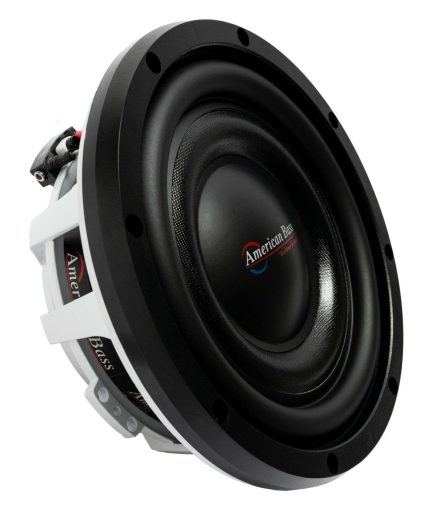
A subwoofer’s job is to reproduce low frequencies that your door or dash speakers physically can’t move enough air to produce. When the sub is asked to play too high in the frequency range, it overlaps with your speakers, creating a honking or bloated sound. When gain is too high, the amplifier clips and the output becomes harsh even at moderate volumes.
Subtle bass isn’t about weak bass. It’s about accurate, well-blended bass that you feel more than you hear.
The Settings That Actually Control How Bass Sounds

Understanding what each control does is the foundation of a good tune.
Gain (not volume): Gain on the amplifier matches the subwoofer’s output level to the rest of your audio system. It does not control loudness the way a volume knob does. Set it too high and you’ll overdrive the amplifier before you run out of headroom on the head unit.
Low-Pass Filter (LPF): This cuts off frequencies above your chosen point so the subwoofer only plays bass, not vocals or guitar. For smooth, musical bass, a setting between 60 Hz and 80 Hz works well in most cars. Higher settings (100 Hz or more) tend to make bass sound thick and directional.
Bass Boost: Most amplifiers include a bass boost circuit, often labeled as “Bass EQ” or “Boost.” For subtle bass, set this to zero. Bass boost raises a narrow band of frequencies and almost always causes distortion at higher volumes.
Phase (0° or 180°): This aligns the subwoofer’s movement with your other speakers. If the sub and speakers are moving out of sync, bass actually cancels out and sounds thin. Switch between 0° and 180° while playing music and choose whichever setting sounds fuller.
Subsonic Filter: If your subwoofer is in a ported enclosure, enabling the subsonic filter around 25–35 Hz protects the driver from damaging ultra-low frequencies that waste amplifier power and produce no useful sound.
Step-by-Step Tuning Guide for Subtle, Musical Bass
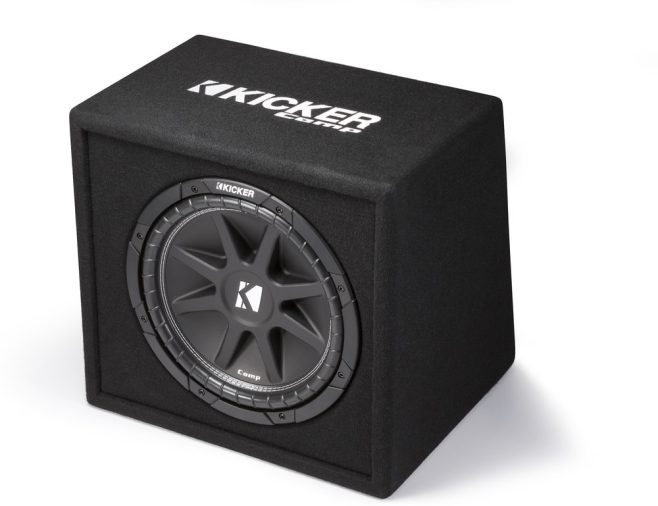
Work through these steps in order. Rushing past an earlier step will make the later ones harder to judge accurately.
- Start with all amp controls reset. Set gain to minimum, LPF to the midpoint, bass boost to zero, and phase to 0°.
- Play a familiar music track at a moderate listening volume. Tracks with bass guitar, acoustic bass, or simple kick drum work better than heavily produced EDM for this purpose.
- Set the LPF at 80 Hz. Play the track and listen for muddiness or a honking quality. If present, lower the filter to 70 Hz or 60 Hz. The sub should disappear into the music rather than call attention to itself.
- Slowly raise the gain until you can just detect the subwoofer’s contribution. The bass should feel slightly more supported, not noticeably louder.
- Check phase. Switch between 0° and 180°. The setting that sounds fuller and less thin is correct for your installation.
- Use the head unit’s EQ to make final adjustments. Many factory and aftermarket head units include a parametric or graphic equalizer. A small cut around 100–160 Hz can tighten the bass significantly.
- Test at different volumes. Bass balance shifts as volume increases. Verify the sub doesn’t suddenly dominate at higher listening levels.
- Leave bass boost at zero unless the system sounds genuinely thin even at proper gain settings. Even then, no more than 3 dB of boost.
How Enclosure Type Changes the Character of Bass
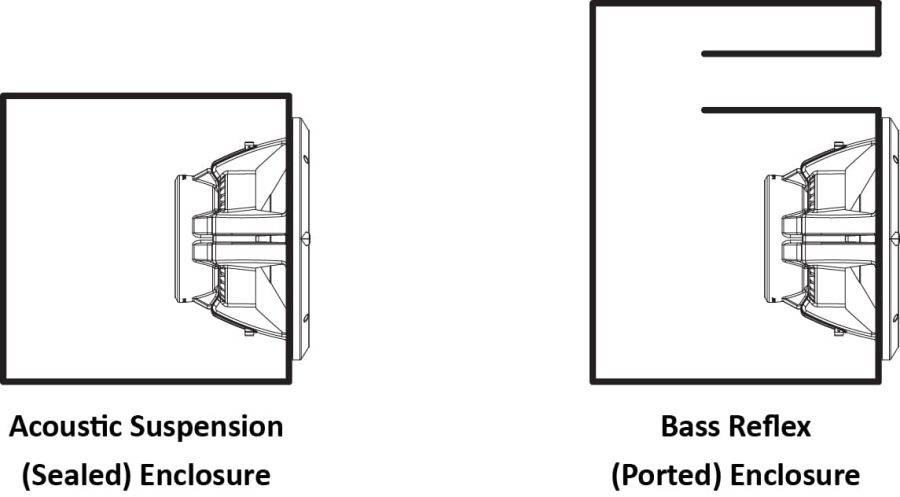
The box your subwoofer sits in shapes the bass character as much as any amplifier setting.
Sealed enclosures produce tighter, more accurate bass with a gradual roll-off below the tuning frequency. For smooth, subtle bass, sealed enclosures are generally the better choice. They hit harder per watt in the upper bass frequencies but don’t extend as deep.
Ported (vented) enclosures play louder and dig deeper but often sound looser. A poorly designed or incorrectly sized ported box is frequently responsible for the boomy, one-note bass people complain about. If you already have a ported enclosure and the bass sounds sloppy, the enclosure design may be part of the problem, not just the amplifier settings.
Enclosure volume and vent tuning frequency are typically specified by the subwoofer manufacturer. A box that deviates significantly from those specs will affect bass quality regardless of how well the amplifier is tuned.
Placement and Cabin Acoustics
Where the subwoofer sits in the vehicle has a meaningful effect on how bass sounds. Trunk mounting produces strong bass but can sometimes create a disconnected rear-heavy sensation. Under-seat subwoofers often blend more naturally because they’re physically closer to the listening position.
Car cabins have resonant frequencies, usually somewhere between 40 Hz and 80 Hz depending on the size of the vehicle. These room modes can cause certain notes to sound louder or louder than others even with perfectly flat amplifier settings. Moving the enclosure position in the trunk—facing forward, backward, or angled—can noticeably change how the bass integrates with the cabin.
Larger vehicles like full-size SUVs and trucks often need more subwoofer output to feel balanced compared to smaller sedans and hatchbacks. Keep that in mind when setting gain levels.
Common Mistakes That Make Bass Sound Harsh or Boomy
- Setting gain by ear at full volume: Gain should be set by matching levels, not by listening at maximum output where distortion is most obvious.
- LPF set too high: An 80 Hz setting is subtle. A 120 Hz setting is very audible. Many people leave the LPF at its default, which is often 120 Hz or higher.
- Relying on bass boost: The Bass EQ circuit on most amplifiers adds color and distortion. Flat is almost always better.
- Ignoring polarity: Wiring a subwoofer out of polarity (+ connected to – at the amplifier or speaker terminals) causes phase issues that thin out bass and require excessive gain to compensate.
- Expecting a single setting to work at all volumes: Bass perception changes with volume. Most listeners tune at low volume and wonder why bass is overwhelming during loud playback.
When Bass Sounds Thin Instead of Subtle
There’s a difference between smooth subtle bass and no bass at all. If the subwoofer sounds thin even after tuning, check these issues before raising the gain:
- Phase is wrong. Flip the phase switch and re-evaluate.
- Gain is set too conservatively. Very low gain means very little output.
- Subwoofer is underpowered. A subwoofer rated for 300 watts RMS receiving 75 watts will sound soft. Match power appropriately.
- Loose or incorrect wiring. A partially grounded amplifier or a poorly connected speaker terminal will rob output.
- Enclosure is wrong size. An undersized ported box or oversized sealed box will sound weak regardless of how the amplifier is set.
Recommended Tools for Accurate Tuning
A digital multimeter is helpful for setting gain accurately using the voltage method rather than by ear. The Boss Audio DD-1 or AudioControl SA-3055 are tools used by installers to set gain levels without distortion, though they add cost to a DIY project.
For casual listeners, a free spectrum analyzer app on a smartphone placed in the listening seat can show which frequencies are over- or under-represented. Apps like REW (Room EQ Wizard) on a laptop provide more detailed analysis.
These tools aren’t required for good results, but they eliminate guesswork and produce a more consistent outcome than tuning by ear alone.
FAQ
What Hz should I set my subwoofer’s low-pass filter for subtle bass?
For smooth, subtle bass that blends naturally with door speakers, a low-pass filter setting between 60 Hz and 80 Hz works well in most cars. Settings above 100 Hz allow the subwoofer to play into the midrange, making bass sound thick and locatable rather than seamless. Start at 80 Hz and lower the setting if the bass sounds cloudy or heavy.
Why does my subwoofer sound boomy no matter how I tune it?
Boomy bass usually comes from one of three sources: the low-pass filter is set too high, the enclosure is incorrectly sized or poorly designed, or bass boost is enabled on the amplifier. A sealed enclosure almost always sounds tighter than a ported box of the wrong volume. Disabling bass boost and lowering the LPF are the first two adjustments to make.
Should the subwoofer phase be set to 0 or 180 degrees?
The correct phase setting depends on your specific installation—there’s no universal answer. Play a bass-heavy track and switch between 0° and 180°. Whichever setting produces fuller, more present bass is correct for your system. This changes based on subwoofer placement relative to the main speakers and the physical distance between them.
Can I get subtle bass from a powerful subwoofer, or do I need a small one?
Subwoofer size doesn’t determine whether you can achieve subtle bass—gain and filter settings control that. A 12-inch or even 15-inch subwoofer can be tuned to sound smooth and unobtrusive. The advantage of a larger or more powerful sub is headroom: it can produce accurate, undistorted bass at moderate listening levels without working hard.
Why does my bass sound perfect at low volume but overwhelming when I turn it up?
This is an extremely common issue called “bass masking.” At low volumes, human hearing is less sensitive to low frequencies, so the sub needs to be louder to feel balanced. As volume increases, bass becomes proportionally more prominent. If you tuned the system at low volume, raise the volume to your normal listening level before finalizing the gain setting.
Does subwoofer placement in the trunk affect sound quality?
Yes, significantly. Trunk placement can create a disconnected sound where bass feels separate from the music. Angling the subwoofer to fire toward the rear seat opening or using a sealed enclosure facing forward often improves integration. Under-seat subwoofers frequently blend better because they’re closer to the front occupants, though they typically produce less maximum output than trunk-mounted systems.
What’s the difference between subwoofer gain and the bass level on my head unit?
The head unit’s bass control adjusts EQ—it boosts or cuts a range of frequencies for the entire output signal. The amplifier’s gain control sets the sensitivity threshold of the amplifier itself. Best practice is to set the head unit’s bass EQ flat (no boost or cut) and use gain on the amp to match levels. EQ can then be used for fine-tuning once the gain is properly set.
Smooth, subtle bass is really about restraint and system balance rather than output level. The key adjustments—lowering the LPF to 60–80 Hz, setting gain conservatively, leaving bass boost off, and correcting phase—will transform an aggressive or muddy subwoofer into one that enhances music without dominating it. Take the time to tune at your normal listening volume, not at low or extreme levels, and you’ll land on a result that actually sounds good across a wide range of music.