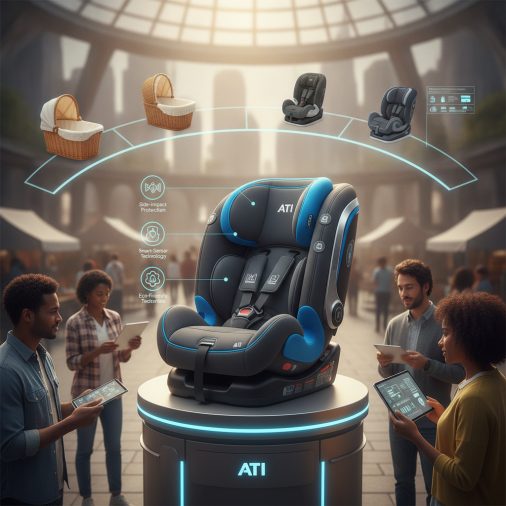
Child passenger safety is one area where getting things right matters enormously. If you’ve come across the ATI name while researching car seats, you may be wondering what it refers to, whether those seats meet current safety standards, and how to evaluate one properly before putting your child in it.
ATI car seats refer to child restraint products manufactured or distributed under the ATI brand. Like all child safety seats sold in the United States, they must comply with Federal Motor Vehicle Safety Standard (FMVSS) No. 213. However, brand compliance with minimum federal standards does not automatically mean a seat performs well in independent crash testing. Before using any ATI car seat, verify that it has not been recalled, confirm it has not expired, install it correctly using LATCH or the vehicle seat belt, and ensure the harness fits snugly against your child’s body.
What ATI Car Seats Are and Where They Fit in the Market
ATI is not among the major mainstream child seat brands like Graco, Britax, Chicco, or Clek. Seats marketed under lesser-known brand names, including ATI, often appear in discount retail environments, warehouse clubs, or online marketplaces at lower price points.
This doesn’t automatically make them unsafe. Every car seat sold legally in the US must meet FMVSS 213 minimums. The relevant question is whether an ATI seat has been independently crash tested by organizations such as Consumer Reports or the Insurance Institute for Highway Safety (IIHS), and how it performed.
If you cannot find independent test data for a specific ATI model, treat that absence of information as a reason for extra caution rather than assumed safety.
Confirming FMVSS 213 Compliance and Recall Status
Before using any car seat — ATI or otherwise — two checks are non-negotiable.
Check for active recalls using the National Highway Traffic Safety Administration (NHTSA) database at nhtsa.gov. Enter the brand name and model number. Recalls can involve harness webbing failures, buckle defects, shell cracking, or labeling errors that affect correct use.
Verify the label compliance statement. Every federally compliant seat must have a permanent label stating that it meets or exceeds FMVSS 213. If that label is missing, damaged, or unreadable, the seat should not be used regardless of who manufactured it.
Many parents discover seat issues only after installation. Checking the NHTSA database before installation takes under five minutes and is worth doing every time you acquire a used or unfamiliar seat.
Expiration Dates and Why They Matter for Safety
Car seats have expiration dates stamped or molded onto the plastic shell, typically between six and ten years from manufacture. ATI seats are no exception.
Polypropylene plastic — the primary structural material in most car seats — degrades over time from heat cycling, UV exposure, and the stress of normal use. An expired seat may look structurally intact but can behave unpredictably in a crash.
Check the manufacture date on the label and calculate whether the seat remains within its stated service life. If no expiration date is listed, look for the manufacture date and consult the instruction manual for the recommended use period. If neither is available, do not use the seat.
Correct Installation: LATCH vs. Seat Belt Method
Proper installation is where many parents encounter real-world difficulty, regardless of brand. Studies consistently show that a significant percentage of car seats are used with installation errors that reduce their protective ability.
LATCH (Lower Anchors and Tethers for Children) connects the seat directly to dedicated anchor points built into the vehicle. The lower anchors are located at the crease between the vehicle seat back and cushion. LATCH is generally easier to achieve a tight installation with compared to the seat belt method, but it has weight limits.
LATCH lower anchors in most vehicles are rated to a combined child-plus-seat weight of 65 pounds. Above that limit, you must transition to the seat belt installation method, regardless of whether the seat physically still connects via LATCH.
The seat belt method routes the vehicle’s lap-and-shoulder belt through the specific belt path molded into the car seat shell. The correct path differs between rear-facing and forward-facing positions. Always follow the ATI instruction manual precisely for belt routing.
A properly installed seat should not move more than one inch side to side or front to back when gripped firmly at the belt path. If it moves more than that, reinstall it or seek help from a certified Child Passenger Safety Technician (CPST).
For families choosing between vehicle configurations, SUVs with well-positioned LATCH anchors and easy-access rear doors make correct installation noticeably simpler.
Harness Fit: The Most Critical In-Use Safety Check
Even a correctly installed seat provides limited protection if the harness is not properly adjusted to the child’s body. This is one of the most commonly observed errors in real-world use.
The pinch test is the standard check. At the collarbone level, grasp the harness webbing between your thumb and index finger. If you can pinch a fold of webbing, the harness is too loose. It should be snug enough that no excess slack can be gathered.
Harness slot height must match the child’s shoulder position. For rear-facing seats, the harness slots must be at or below the child’s shoulders. For forward-facing seats, the slots must be at or above the shoulders. Incorrect slot height is common and reduces crash protection significantly.
The chest clip should sit at armpit level, not on the stomach or neck. The chest clip is a positioning device only — it is not a load-bearing component in a crash — but correct positioning keeps the harness straps on the shoulders where they belong.
Never use aftermarket harness padding or head supports inside the harness unless they were included with the specific seat. Aftermarket inserts have not been crash tested with the seat and can affect harness fit. For approved comfort accessories, only items tested with the seat itself should be used. Parents researching infant car seat strap covers and harness padding safety should confirm compatibility with their specific seat model before use.
Rear-Facing vs. Forward-Facing: Age, Weight, and Height Limits
Current child passenger safety guidance from the American Academy of Pediatrics (AAP) recommends keeping children rear-facing for as long as the seat’s limits allow — not just until a minimum age or weight milestone.
Rear-facing provides superior crash protection because the force of a frontal collision is distributed across the child’s back, head, and neck rather than concentrated on harness attachment points.
Forward-facing with a harness is appropriate once a child has genuinely outgrown the rear-facing limits of their seat — meaning they have exceeded either the weight limit or the height limit specified by the manufacturer.
For ATI convertible seats, confirm the specific rear-facing and forward-facing weight and height limits from the instruction manual or the seat’s labels. Do not estimate based on what you might know about other brands. Limits vary between models.
Convertible car seats with higher rear-facing weight limits allow children to remain in the safer rear-facing position longer, which is worth considering when evaluating any seat.
Using a Second-Hand ATI Car Seat Safely
Second-hand car seats carry risks that new seats do not. The primary concerns are:
– Unknown crash history — A seat involved in a moderate or severe crash may have internal structural damage not visible externally. Many manufacturers recommend replacement after any crash, even if the seat looks undamaged.
– Missing or unreadable labels — Without the compliance label and manufacture date, you cannot verify safety standards or remaining service life.
– Absent instruction manual — Without the manual, correct installation and harness routing cannot be confirmed.
– Unknown storage conditions — Extreme heat, chemical exposure, or physical damage may have compromised the seat without obvious visual signs.
If you cannot verify all of the above for a used ATI seat, replacement with a new seat from a well-tested brand is the safer decision. For budget-conscious families, affordable convertible car seats with solid independent safety ratings provide verified protection at accessible price points.
When to Replace an ATI Car Seat
Replace the seat immediately if:
– The vehicle was involved in a moderate or severe crash while the seat was installed (even if the seat was unoccupied — check your manufacturer’s guidelines, as policies vary)
– The seat has reached or exceeded its expiration date
– The plastic shell shows cracks, distortion, or visible structural damage
– Harness webbing is frayed, torn, or stiff
– The buckle is difficult to latch or release, or clicks without firmly securing
– Labels are missing and the seat’s compliance status cannot be confirmed
A seat that looks fine externally can still have compromised structural integrity. When in doubt, replace it. Child safety seats are not an area where caution is overcautious.
Getting Professional Installation Help
Certified Child Passenger Safety Technicians (CPSTs) offer free or low-cost seat checks at inspection stations across the country. NHTSA maintains a locator tool for finding certified technicians near you.
A CPST can verify correct installation for your specific vehicle and seat combination, check harness adjustment, identify errors you may have missed, and answer questions about LATCH anchor location and weight limits for your vehicle.
This service is particularly valuable with less-familiar brands like ATI, where manufacturer support resources may be limited compared to major brands. For parents also evaluating independently safety-rated infant car seats as alternatives, a CPST check is equally worthwhile during that process.
FAQ
Is an ATI car seat safe for my child?
An ATI car seat sold legally in the US must meet FMVSS 213 minimum federal standards. However, meeting minimum requirements does not guarantee strong performance in independent crash testing. Check the NHTSA recall database for the specific model, verify the expiration date, and confirm correct installation and harness fit before use. If independent crash test data is unavailable for that model, consider a seat from a brand with published third-party test results.
How do I find out if my ATI car seat has been recalled?
Visit nhtsa.gov and search under the recalls section using the brand name “ATI” and your model number. You can also register the seat with the manufacturer to receive recall notifications automatically. NHTSA also maintains a toll-free vehicle safety hotline. Checking before first use and periodically thereafter is a straightforward safety practice.
What weight limit does an ATI car seat have?
Weight limits vary by specific ATI model and by whether the seat is in rear-facing or forward-facing mode. These limits are printed on the seat’s labels and detailed in the instruction manual. Never estimate limits from memory or from another brand’s seat. Using a seat beyond its weight or height limit reduces crash protection.
Can I use a car seat cover or aftermarket insert with an ATI car seat?
Only use accessories that were included with the seat at purchase or that the manufacturer explicitly approves for that specific model. Aftermarket inserts, padding, and covers have not been crash tested with the seat and can interfere with harness function and fit. Parents interested in decorative car seat covers should always confirm product compatibility before use.
How tight should the harness be on an ATI car seat?
The harness should be snug enough that the pinch test at the collarbone fails — meaning you cannot gather a fold of webbing between your fingers at that point. The chest clip should rest at armpit level. There should be no visible slack in the straps when the child is seated correctly. A loose harness is one of the most common and consequential errors in child seat use.
Should I register my ATI car seat?
Yes. Registering the seat with the manufacturer ensures you receive recall notifications directly. Registration typically requires the model number and manufacture date, which are printed on the seat’s label. Unregistered seats are more likely to remain in use after a safety recall has been issued.
What is the difference between LATCH and seat belt installation for an ATI car seat?
LATCH uses built-in lower anchor connectors to attach the seat directly to your vehicle’s dedicated anchor points, which are typically located at the rear seat cushion crease. Seat belt installation routes the vehicle lap-and-shoulder belt through the seat’s molded belt path. Both methods are safe when used correctly. LATCH has weight limits — typically 65 pounds combined child and seat weight — after which seat belt installation is required.
Final Thoughts
ATI car seat safety depends entirely on whether the specific seat is current within its service life, free of active recalls, correctly installed in the vehicle, and properly fitted to the child every time it is used. Meeting federal minimums is a starting point, not a complete safety guarantee. If independent crash test data is unavailable for an ATI seat you already own, prioritize the practical checks — installation tightness, harness fit, expiration date, and recall status — and consider consulting a certified CPST for a hands-on verification. For families open to alternatives, choosing a seat with published independent crash test results from Consumer Reports or IIHS adds a meaningful layer of verified assurance.