Choosing the right car seat involves more than matching your child’s age to a label on the box. Height and weight limits determine when a seat is safe, when it’s outgrown, and when it’s time to move to the next stage — and getting this wrong has real consequences in a crash.
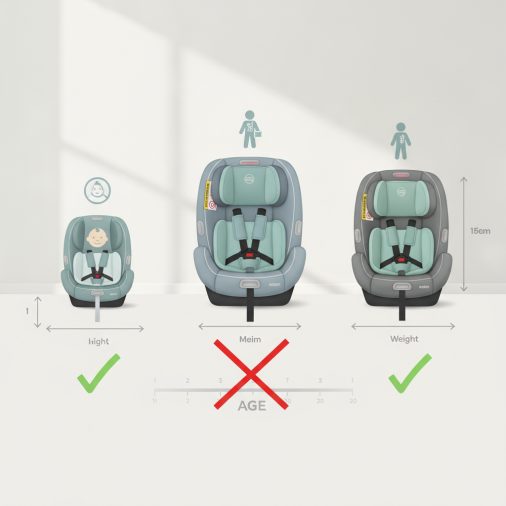
Car seat guidelines are based primarily on height and weight, not age alone. Infants typically start in rear-facing seats with weight limits ranging from 4 to 35+ pounds. Children should remain rear-facing until reaching their seat’s upper limit, then move to a forward-facing harness seat, followed by a booster, and finally a seat belt alone when they reach approximately 4 feet 9 inches tall and 80–100 pounds — usually between ages 8 and 12.
Why Height and Weight Matter More Than Age
Age is a rough guide, but children grow at very different rates. A large 18-month-old may hit the height limit of an infant carrier well before a smaller 2-year-old does. Using age as the sole transition trigger is one of the most common mistakes parents make.
Car seat manufacturers set specific height and weight limits based on structural testing and crash-force calculations. Exceeding those limits — even by a few pounds — means the seat’s harness geometry, foam, and shell are no longer providing the designed level of protection.
Every seat’s label or manual lists the minimum and maximum weight and height for each mode. These numbers are the hard boundaries, not suggestions.
Rear-Facing Stage: Infant and Convertible Seats
Infant-only seats are designed for newborns and small babies. Their typical limits are:
– Weight: 4 lbs minimum to 22–35 lbs maximum, depending on the model
– Height: Up to 30–32 inches for most infant carriers
These seats are not adjustable between modes — they are rear-facing only. When your child’s weight or height reaches the seat’s printed limit, it’s time to move on.
Convertible seats used rear-facing cover a much broader range:
– Weight: Usually 5–40 lbs rear-facing, with some high-limit models allowing up to 50 lbs
– Height: Typically up to 40–43 inches rear-facing
The American Academy of Pediatrics and the National Highway Traffic Safety Administration both recommend keeping children rear-facing as long as possible — specifically until they reach the maximum height or weight limit of their rear-facing seat, not just until their second birthday.
Rear-facing is safer because the seat distributes crash forces across the entire back, neck, and head rather than concentrating them on the harness attachment points. For parents researching seats that allow extended rear-facing well beyond infancy, convertible seats with high rear-facing weight limits offer significantly more time in this position.
Forward-Facing Harness Stage: Toddlers and Preschoolers
Once a child genuinely maxes out their rear-facing seat’s limits, they move to a forward-facing harness seat. The transition is about the seat’s limits, not the child’s age.
Typical forward-facing harness seat limits:
| Seat Type | Weight Range | Height Range |
|—|—|—|
| Standard forward-facing | 22–65 lbs | Up to 43–49 inches |
| Combination/harnessed booster | 22–90 lbs | Up to 49–57 inches |
The 5-point harness — two shoulder straps, two hip straps, and a crotch strap — remains the safest restraint system for children who are not yet large enough for a booster seat. Children should stay in a harnessed seat until they reach the seat’s harness weight or height limit, whichever comes first.
A common real-world mistake is moving a child to a booster seat too early because it seems easier to buckle. A booster seat relies on the vehicle’s shoulder belt to restrain the child, which only works correctly when the child is large enough for that belt to fit properly across the shoulder and chest.
For three-year-olds who are still within harness limits, forward-facing harness seats designed for 3-year-olds provide better protection than moving to a booster prematurely.
Booster Seat Stage: School-Age Children
When a child exceeds their forward-facing harness seat’s limit, a booster seat positions the vehicle’s seat belt correctly across the child’s body.
High-back boosters are generally preferred for:
– Children who need head and neck support
– Vehicles without adequate headrests
– Weight typically 40–100 lbs and height 38–57 inches
Backless boosters work when:
– The vehicle seat has an adequate head restraint
– Weight typically 40–110 lbs
– Height range varies by model
The critical measurement is belt fit, not just weight. A child should use a booster until:
– The shoulder belt rests across the middle of the shoulder and chest — not the neck or face
– The lap belt lies across the upper thighs — not the stomach
– The child can sit with their back against the seat, knees bent over the seat edge, and feet flat on the floor for the entire trip
Most children meet these criteria between 8 and 12 years old, typically at around 4 feet 9 inches tall.
Seat Belt Alone: When Is a Child Ready?
The vehicle’s seat belt is designed for adults and assumes a minimum size to fit correctly. A child is ready for a seat belt without a booster when all five of these conditions are met:
1. Sits with their back fully against the vehicle seat back
2. Knees bend naturally at the seat edge
3. Feet rest flat on the floor
4. Shoulder belt crosses the chest and shoulder — not the neck
5. Lap belt lies across the upper thighs — not the stomach
If any of these don’t apply, the child still needs a booster. The 5-Step Test from SafeKids Worldwide is a widely used reference for making this assessment.
Age-by-Age Quick Reference Chart
This table reflects general guidance. Always prioritize the limits printed on the specific seat your child is using.
| Child’s Age | Typical Stage | Weight Guideline | Height Guideline |
|—|—|—|—|
| Newborn – 12 months | Rear-facing (infant or convertible) | Up to 22–35 lbs | Up to 30–35 inches |
| 1 – 3 years | Rear-facing (convertible, extended) | Up to 40–50 lbs | Up to 40–43 inches |
| 2 – 7 years | Forward-facing with harness | 22–65 lbs (up to 90 lbs on some) | Up to 49–57 inches |
| 4 – 12 years | High-back or backless booster | 40–100+ lbs | 38–57 inches |
| 8 – 12+ years | Seat belt alone (when ready) | ~80+ lbs | ~4 ft 9 in or taller |
Ages in this chart represent common ranges, not fixed cutoffs. A 4-year-old who is still within their harness seat’s limits should stay in that seat, and a 10-year-old who doesn’t pass the 5-step belt-fit test should remain in a booster.
Common Mistakes That Reduce Safety
Moving to the next stage too early. Many parents transition out of a rear-facing seat at 12 months simply because it seems like the obvious milestone. The correct trigger is reaching the seat’s printed limits, not a birthday.
Ignoring the height limit. Weight limits get most of the attention, but height limits matter just as much. When a child’s shoulders sit above the top harness slot on a forward-facing seat, or when their head is less than one inch from the top of the shell in a rear-facing seat, the seat is outgrown by height regardless of weight.
Loose harness straps. A correctly fitted harness should pass the pinch test — you should not be able to pinch excess strap material at the child’s collarbone after tightening.
Chest clip positioned incorrectly. The chest clip belongs at armpit level, not at the stomach. An improperly placed chest clip does not restrain the child correctly in a frontal crash and can cause abdominal injury.
Using an expired or damaged seat. Car seats have expiration dates — typically 6 to 10 years from manufacture — because plastic degrades and safety standards evolve. A seat involved in a moderate or severe crash should generally be replaced.
Keeping the harness clean matters too, but the wrong cleaning method can compromise the webbing. Parents who need guidance on safe harness maintenance can reference how to clean car seat straps without damaging them.
Newborn-Specific Considerations
Newborns under 5 lbs or born premature require a seat with a low minimum weight limit and proper lateral support. Many standard infant seats have a 4 lb minimum, but hospital neonatal teams typically evaluate whether a specific seat passes a car seat tolerance screening before discharge.
Newborn inserts and positioning wedges can help maintain head and spine alignment in the early weeks before a baby has sufficient muscle control. For parents of small newborns, newborn car seat inserts designed for head and neck support can provide appropriate positioning within a compatible seat — though always confirm the insert is approved by the seat manufacturer, since aftermarket inserts can alter crash performance if not tested with the seat.
Frequently Asked Questions
At what weight should a child move from rear-facing to forward-facing?
The transition should happen only when the child exceeds the maximum rear-facing weight or height limit printed on their specific seat — not at a fixed weight like 20 or 30 lbs. Many convertible seats allow rear-facing up to 40–50 lbs, which keeps most children rear-facing well into their toddler years. Always check the seat’s label rather than using general age or weight rules.
Can a child stay rear-facing past age 2?
Yes, and safety organizations actively encourage it. The two-year guideline that appears in older recommendations has been revised. Current guidance from the American Academy of Pediatrics is to keep children rear-facing until they reach the maximum limit of their rear-facing seat, regardless of age. Many children comfortably remain rear-facing until age 3 or 4 in a high-limit convertible seat.
What happens if a child’s shoulders are above the harness slots in a forward-facing seat?
This indicates the child has outgrown the seat by height. The shoulder straps should sit at or slightly above the child’s shoulders in a forward-facing seat. When the shoulders consistently exceed the top harness slot, the harness cannot restrain the child correctly, and it’s time to move to a higher-limit seat or a booster if the child also meets the weight criteria.
Is a 4-year-old ready for a booster seat?
Not necessarily. A 4-year-old who is still within the harness weight and height limit of their forward-facing seat should remain in a harnessed seat. The 5-point harness provides better crash protection than a booster at this stage. Forward-facing seats designed for 4-year-olds with higher harness limits allow children to stay in a harness longer, which safety experts recommend.
How do I know when my child no longer needs a booster seat?
Use the 5-step belt-fit test. The child is ready for a seat belt alone only when they can sit with their back against the seat back, knees bent naturally at the edge, feet flat on the floor, the shoulder belt crossing the chest and shoulder correctly, and the lap belt lying across the upper thighs — not the abdomen. Most children don’t meet all five criteria until they are at least 4 feet 9 inches tall, typically between ages 8 and 12.
Does vehicle seat design affect how a car seat fits?
Yes, significantly. Some vehicle seat backs are angled or contoured in ways that affect how a child seat sits and whether the seat belt path aligns correctly with a booster. A seat that fits well in one vehicle may not install correctly in another. Always check the installation in your specific vehicle and consult the car seat manual for vehicle compatibility notes. The NHTSA website provides a vehicle-specific car seat fitting station locator.
What is the minimum weight for a rear-facing car seat?
Most infant seats have a minimum weight of 4 lbs. Convertible seats typically have a minimum of 5 lbs. These lower limits exist for premature or low-birth-weight infants. Before using any seat with a very small newborn, confirm that the seat is appropriate for the child’s specific weight and that no aftermarket padding is used unless approved by the seat manufacturer.
Final Thoughts
Car seat safety comes down to one consistent principle: keep your child in each stage until they genuinely outgrow it by height or weight — not by age or convenience. The limits printed on the seat are structural safety thresholds, not rough estimates. A child who is still within harness limits at age 5 is safer in that harness than in a booster. A child who passes the 5-step belt-fit test at age 9 is ready for a seat belt alone. Let the measurements guide the decision, and always verify the limits on your specific seat rather than relying on general age charts alone.