Upgrading your factory car speakers is one of the most noticeable improvements you can make to in-car audio. The right brand and model depends on how loud you want to go, what power your head unit can deliver, and how much installation work you’re prepared to do. This guide covers five specific speaker options from Kenwood, JVC, Skar Audio, and BOSS — comparing their advertised specs, materials, and real-world fit so you can pick the right pair for your setup.
As an Amazon Associate I earn from qualifying purchases.
At a Glance
Best for Budget Audiophiles
Kenwood KFC-1666R Road Series — 6.5″ 2-Way Coaxial
- 300W peak / 30W RMS; cloth woofer cone and balanced dome tweeter
- Shallow mount depth simplifies door installation
- 40Hz–22kHz frequency range covers a broad audio spectrum
Best for Sensitivity
JVC CS-J620 CS Series — 6.5″ 2-Way Coaxial
- 92 dB sensitivity — highest among the five models listed here
- Mica cone woofer and 1″ PEI tweeter; 35Hz–22kHz frequency response
- Includes wire extensions and mounting tabs for flexible installation
Entry-Level Skar Pick
Skar Audio RPX65 — 6.5″ 200W 2-Way Coaxial
- 60W RMS (pair); microfiber paper cone with butyl rubber surround
- 3/4″ aluminum dome tweeter for detailed high-frequency reproduction
- Lower peak power than competing models in this guide
Upgraded Skar Option
Skar Audio TX65 Elite — 6.5″ 200W 2-Way Coaxial
- 100W RMS (pair) — highest continuous power rating in this guide
- 1″ silk dome tweeter and 1.25″ copper voice coil; TPE surround
- Frequency response starts at 45Hz, slightly higher than some rivals
Budget 3-Way Choice
BOSS Audio CH6530 — 6.5″ 3-Way Coaxial, 300W Pair
- 3-way design adds a midrange driver alongside tweeter and woofer
- 90 dB sensitivity; poly injection cone with rubber surround
- Narrower frequency response (100Hz–18kHz) than 2-way competitors here
Quick Product Comparison
| Model | Configuration | Peak / RMS Power (Pair) | Sensitivity | Frequency Response | Key Buyer Consideration |
|---|---|---|---|---|---|
| Kenwood KFC-1666R | 6.5″ 2-Way Coaxial | 300W / 30W RMS | Not specified | 40Hz–22kHz | Shallow depth aids tight door installs |
| JVC CS-J620 | 6.5″ 2-Way Coaxial | 300W / 30W RMS | 92 dB | 35Hz–22kHz | Best sensitivity; suited for lower-powered head units |
| Skar Audio RPX65 | 6.5″ 2-Way Coaxial | 200W / 60W RMS | 89 dB | 40Hz–20kHz | Butyl rubber surround for durability; entry Skar tier |
| Skar Audio TX65 | 6.5″ 2-Way Coaxial | 200W / 100W RMS | 89 dB | 45Hz–20kHz | Highest RMS rating; benefits from external amplifier |
| BOSS CH6530 | 6.5″ 3-Way Coaxial | 300W / Not specified | 90 dB | 100Hz–18kHz | 3-way design; narrowest frequency range in this group |
Kenwood KFC-1666R Road Series Car Speakers (Pair)
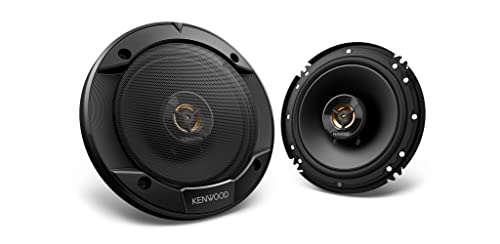
The Kenwood KFC-1666R is a 6.5-inch 2-way coaxial speaker pair aimed at drivers who want a straightforward OEM replacement with noticeably better audio quality. Kenwood advertises 300W peak power and a 30W RMS rating, which makes these speakers a practical match for most factory head units without requiring an external amplifier. They are listed as suitable for both front and rear door positions, giving installers flexibility when planning a full-cabin upgrade. The shallow-mount design and included grilles make them appealing for anyone doing a DIY installation without specialized tools.
Verified Specifications
| Specification | Value |
|---|---|
| Speaker Size | 6.5 inches |
| Configuration | 2-Way Coaxial |
| Peak Power | 300W |
| RMS Power | 30W |
| Impedance | 4 Ohms |
| Frequency Response | 40Hz – 22kHz |
| Woofer Material | Cloth cone |
| Tweeter Type | Balanced dome |
Key Features and Practical Benefits
The cloth woofer cone is a meaningful material choice at this price tier. Cloth cones are generally lighter than polypropylene alternatives, which can help with transient response and midrange detail, though this is a manufacturer claim and not independently verified here. The balanced dome tweeter is designed to disperse high frequencies more evenly across the cabin, which matters in car audio where listener positioning is never ideal.
The 40Hz–22kHz frequency response covers the full audible range for most music genres, meaning you should hear tight bass notes as well as crisp treble without needing separate component tweeters. At 30W RMS, these speakers are realistically powered by a factory stereo — a practical detail that many budget speakers obscure behind inflated peak figures. The heavy-duty magnet design and shallow depth are listed specifically to ease installation in tight door cavities, and the included grilles add a finished look while protecting the cones.
Documented Advantages and Trade-Offs
Advantages: The 4-ohm impedance is compatible with virtually every factory and aftermarket head unit sold in the US market. The wide frequency response (40Hz–22kHz) is broader than several competitors in this guide. Kenwood is a well-established brand with a broad product ecosystem, which can matter if you plan to expand your audio setup later.
Trade-Offs: The 30W RMS rating is modest. Buyers planning to run a dedicated amplifier may find these speakers limiting compared to models rated for higher continuous power. Sensitivity is not listed in the supplied product data, so it is not possible to confirm how efficiently these speakers convert power to volume — a relevant detail for low-powered factory systems. Compatibility with specific vehicle mounting configurations is not confirmed in the supplied information and should be verified against your vehicle’s speaker cutout dimensions before purchasing.
Who Should Consider It
The KFC-1666R is a sensible choice for drivers replacing worn or weak factory speakers in a 6.5-inch location and running them off a standard head unit. Kenwood’s brand reputation and the broad frequency response make this an appealing entry-level upgrade for everyday listening across genres. Buyers who want to add an amplifier later, or who need confirmed sensitivity specs for a low-powered system, should verify those details before committing.
Setup and Everyday Use
The listed shallow top-mount depth and lower tweeter height are intended to reduce the risk of the speaker hitting window regulators or glass during installation — a common problem with 6.5-inch door speakers. Kenwood includes grilles, which simplifies the finishing step. As with any 6.5-inch coaxial replacement, confirm your vehicle’s mounting depth and hole diameter before ordering; these dimensions are not specified in the supplied product data for this model. For standard OEM replacements, no wiring adapter is listed as included, so a plug-and-play wiring harness adapter for your specific vehicle may be needed separately.
JVC CS-J620 300W 6.5″ CS Series 2-Way Coaxial Car Speakers

The JVC CS-J620 is a budget-friendly 6.5-inch 2-way coaxial pair that targets drivers replacing factory speakers without adding an amplifier. JVC advertises 300W peak and 30W RMS power, identical peak figures to the Kenwood KFC-1666R, but differentiates itself with a notably higher advertised sensitivity rating of 92 dB and a slightly wider low-end frequency response starting at 35Hz. The package includes wire extension cables, screws, and mounting tabs, which is a practical advantage for installs that require minor modification to the factory location.
Verified Specifications
| Specification | Value |
|---|---|
| Speaker Size | 6.5 inches |
| Configuration | 2-Way Coaxial |
| Peak Power | 300W |
| RMS Power | 30W |
| Impedance | 4 Ohms |
| Sensitivity | 92 dB |
| Frequency Response | 35Hz – 22kHz |
| Woofer Material | 6.5″ Mica cone |
| Tweeter Type | 1″ PEI dome |
| Top Mount Depth | 1-23/32 inches |
Key Features and Practical Benefits
The 92 dB sensitivity rating is the most practically important specification for buyers using a factory head unit. Higher sensitivity means the speaker produces more volume from the same wattage — a meaningful real-world difference in a low-power system where the head unit may only deliver 15–20W per channel in practice. This is an advertised figure and not independently tested here, but it is a useful comparison point against other models in this guide where sensitivity is not listed.
The mica cone woofer is a rigid, relatively lightweight material intended to reduce cone flex at higher volumes, which can help maintain clarity when pushing the speaker. The 1-inch PEI (polyetherimide) tweeter is a synthetic material chosen for its stiffness-to-weight ratio, designed to handle high frequencies without the harshness sometimes associated with hard dome materials. JVC’s inclusion of a hybrid surround (rubber and cloth diaphragm) is intended to balance durability with excursion control.
The shallow top-mount depth of 1-23/32 inches is one of the most specific and useful installation figures in this guide. Pre-arranged mounting holes and included hardware — wire extension cables, screws, and mounting tabs — reduce the tools and parts a DIY installer needs to source separately.
Documented Advantages and Trade-Offs
Advantages: The 92 dB sensitivity is the highest advertised figure among the products in this guide where sensitivity data is supplied, making the CS-J620 a strong candidate for factory head unit use. The 35Hz low-end extension is slightly wider than the Kenwood’s 40Hz floor, which could translate to marginally deeper bass reproduction — though this is a manufacturer-listed claim. The included mounting hardware and wire extensions add genuine installation convenience not offered by every competitor here.
Trade-Offs: At 30W RMS, the continuous power handling is the same modest figure shared with the Kenwood — adequate for factory use but limiting if you plan to add a dedicated amplifier. The black ABS composite grilles are functional but may not suit all interior aesthetics. As with all products in this guide, vehicle-specific fitment — particularly mounting depth clearance — should be confirmed independently before purchase, as the supplied data does not address compatibility with specific makes and models.
Who Should Consider It
The JVC CS-J620 is particularly well suited to drivers running a stock head unit who want maximum volume and clarity from the available power. The higher sensitivity rating and the included installation accessories make it one of the more practical drop-in options in this comparison for a true DIY install. Buyers who plan to add amplification down the road should consider whether the 30W RMS ceiling meets their future needs, and should confirm door cavity mounting depth against the listed 1-23/32-inch figure for their specific vehicle.
Setup and Everyday Use
JVC’s shallow mount depth and pre-drilled mounting holes are specifically noted to help avoid contact with window regulators and door glass — a common installation concern with 6.5-inch speakers in factory locations. The included wire extension cables are a useful addition for vehicles where the OEM connector sits farther from the speaker location than a standard replacement cable can reach. A separate plug-and-play wiring harness adapter matched to your vehicle may still be needed for a clean, no-cut installation, as none is listed as included in the supplied product data. Check your door panel’s mounting depth with a ruler before ordering to confirm the 1-23/32-inch spec fits your specific application.
Skar Audio RPX65 6.5″ 200W 2-Way Coaxial Car Speakers, Pair

The Skar Audio RPX65 is a straightforward entry-level coaxial upgrade aimed at drivers who want noticeably better sound than their factory speakers without spending a lot. At 200W peak and 60W RMS for the pair, these are best matched to a head unit running at moderate power rather than an outboard amplifier. The 6.5-inch size fits a wide range of common door and dash locations, making the RPX65 a practical drop-in replacement for many vehicles.
Verified Specifications
| Specification | Value |
|---|---|
| Peak Power (Pair) | 200 Watts |
| RMS Power (Pair) | 60 Watts |
| Impedance | 4 Ohms |
| Voice Coil | 1″ KSV |
| Tweeter Size | 3/4″ (20mm) Aluminum Dome |
| Sensitivity | 89 dB |
| Frequency Response | 40 Hz – 20,000 Hz |
Key Features and Practical Benefits
The woofer cone is made from microfiber paper, which is stiffer and lighter than standard paper, helping it move more accurately at moderate listening volumes. The butyl rubber surround is a meaningful material choice at this price point — butyl holds up better over time than foam surrounds, which tend to deteriorate with heat and UV exposure in a car environment.
The 3/4-inch aluminum dome tweeter is smaller than the one-inch tweeters found on some competing models, but aluminum is a rigid material that can produce clean, extended highs when properly crossed over. The frequency response claim of 40 Hz to 20,000 Hz is broad for a coaxial speaker, though buyers should note these are manufacturer-listed figures and real-world low-end output will depend heavily on the vehicle’s door cavity and any sound deadening in place.
Sensitivity is listed at 89 dB, which is typical for this class. It means the speakers will play at a reasonable volume from a stock head unit but won’t be especially efficient compared to higher-sensitivity options in this roundup.
Documented Advantages and Trade-Offs
The butyl rubber surround and microfiber paper cone are genuine material upgrades over many speakers in this price bracket, and the 4-ohm impedance is compatible with virtually all factory and aftermarket head units. The 60W RMS rating for the pair (30W per speaker) is modest — it aligns well with typical head-unit output but leaves limited headroom if you plan to add an amplifier later.
The aluminum dome tweeter adds brightness to the high end, which some listeners enjoy and others find fatiguing at high volumes. Whether the tweeter dispersion suits your listening position is something to consider based on where the speakers will mount. Mounting depth and cutout dimensions are not specified in the supplied product data, so buyers should measure their door cavities carefully before purchasing.
Who Should Consider It
The RPX65 suits budget-conscious buyers replacing worn-out or tinny OEM speakers in a standard 6.5-inch location who are running a factory or mid-range aftermarket head unit. It is a reasonable first upgrade for someone who wants better clarity without adding an amplifier. Buyers planning a full amplified system with dedicated component speakers should look at a higher RMS-rated option. Confirm mounting depth compatibility with your specific vehicle before ordering.
Setup and Everyday Use
The 4-ohm impedance makes these a plug-and-play swap for most factory wiring harnesses when used with an appropriate wiring adapter for your vehicle. Because mounting specifics are not listed in the supplied data, measure your existing speaker depth and cutout diameter before installation. General best practice for coaxial speakers at this power level is to set your head unit’s built-in high-pass filter (if available) around 80 Hz to protect the speaker cone and reduce distortion at higher volumes.
Skar Audio TX65 6.5″ 200W 2-Way Elite Coaxial Car Speakers, Pair

The Skar Audio TX65 sits a step above the RPX65 in Skar’s own lineup, carrying the “Elite TX Series” label and a meaningfully higher RMS power rating. With 100W RMS for the pair — compared to 60W RMS for the RPX65 — the TX65 is a better candidate for buyers who already have or plan to add a modest external amplifier. It shares the same peak power figure of 200W, but the higher continuous RMS headroom is the more useful number for day-to-day listening.
Verified Specifications
| Specification | Value |
|---|---|
| Peak Power (Pair) | 200 Watts |
| RMS Power (Pair) | 100 Watts |
| Impedance | 4 Ohms |
| Voice Coil | 1.25″ Copper |
| Tweeter | 1″ Silk Dome |
| Sensitivity | 89 dB |
| Frequency Response | 45 Hz – 20,000 Hz |
| Magnet Type | Ferrite |
| Surround Material | TPE (Thermoplastic Elastomer) |
Key Features and Practical Benefits
The most meaningful upgrade over the entry-level RPX65 is the 1-inch silk dome tweeter. Silk domes are generally considered smoother-sounding than aluminum domes at high frequencies, producing less of the brightness or edge that some listeners notice with metal-dome designs. For buyers who listen to vocals, acoustic music, or jazz at higher volumes, a silk tweeter is often a preferred choice.
The 1.25-inch copper voice coil is larger than the 1-inch KSV coil in the RPX65. A larger voice coil dissipates heat more effectively, which is directly relevant to the TX65’s higher 100W RMS rating — the coil can sustain that output level for longer periods without thermal compression. The ferrite magnet is a standard, reliable magnet type for this class of speaker.
The TPE surround replaces the butyl rubber found on the RPX65. TPE is a flexible synthetic material used widely in car audio; it is durable in automotive temperature ranges, though long-term performance data for this specific product is not available from the supplied listing information.
Documented Advantages and Trade-Offs
The TX65’s 100W RMS rating makes it genuinely compatible with low-powered external amplifiers, which expands upgrade options beyond what the RPX65 supports. The silk dome tweeter is a design choice that prioritizes smoothness over maximum brightness. The sensitivity of 89 dB matches the RPX65, so neither speaker is more efficient than the other from a head-unit-output perspective.
The lower frequency limit of 45 Hz (versus 40 Hz on the RPX65) is a minor difference and unlikely to be perceptible in most installations. As with the RPX65, mounting dimensions and cutout requirements are not included in the supplied product data, which is an important gap buyers need to close before purchasing. No warranty or included-accessory information was specified in the available data.
Who Should Consider It
The TX65 is the better pick among the two Skar models for buyers who want to pair their speakers with a small outboard amplifier, or who prefer a warmer, less aggressive high-frequency character from a silk tweeter. It is also a solid choice for anyone upgrading a 6.5-inch location in a vehicle where they play music at sustained higher volumes, since the larger voice coil handles heat better under those conditions. Buyers running a stock head unit with no amplifier plans will still benefit, but the RPX65 would meet that use case at a lower price point. Confirm fitment dimensions with your specific vehicle before ordering, as this data was not included in the supplied listing.
Setup and Everyday Use
At 4 ohms, the TX65 is compatible with standard aftermarket and factory head units as well as most entry-level amplifiers. If connecting to an amplifier, set the amp’s gain conservatively relative to the 50W-per-speaker RMS rating to avoid clipping, which can damage tweeters even at below-peak power levels. As a general practice with coaxial speakers in door locations, applying a high-pass crossover at 80 Hz or higher reduces cone excursion and distortion, particularly when a subwoofer is handling low-frequency duties elsewhere in the system.
BOSS Audio Systems CH6530 6.5 Inch Car Speakers, 300 Watts Per

The BOSS Audio Systems CH6530 is a 3-way, 6.5-inch coaxial speaker pair aimed at budget-conscious buyers who want more audio range than a standard 2-way setup offers. With a dedicated midrange driver added to the tweeter and woofer, these speakers are designed to handle a broader slice of the frequency spectrum within a single, straightforward coaxial unit. They suit drivers replacing worn factory speakers who are not yet ready to invest in a full component system.
Verified Specifications
| Specification | Value |
|---|---|
| Speaker Size | 6.5 inches |
| Peak Power (pair) | 300 watts |
| Impedance | 4 ohms |
| Frequency Response | 100 Hz – 18 kHz |
| Sensitivity | 90 dB @ 1W/1m |
| Mounting Depth | 2.1 inches |
| Mounting Hole Diameter | 5.5 inches |
| Woofer Cone Material | Poly injection |
| Surround Material | Rubber |
| Voice Coil | 1-inch |
| Tweeter | 0.50-inch piezo |
| Midrange Driver | 1-inch polyimide dome |
| Pair Weight | 1.3 lbs. |
| Overall Dimensions | 6.6 × 6.6 × 2.4 inches |
Key Features and Practical Benefits
The 3-way driver configuration is the CH6530’s most distinctive feature. The added 1-inch polyimide dome midrange sits between the poly-injection woofer and the piezo tweeter, which is intended to prevent the midrange muddiness that can occur when a 2-way speaker’s woofer cone handles too much of the vocal and instrumental range. Whether this translates to clearly audible improvement depends on your source material and listening habits, but the design intent is sound.
A sensitivity of 90 dB at 1W/1m is a reasonable figure for a budget coaxial. This means the CH6530 should produce usable volume levels even when powered directly from a factory head unit, making it a practical drop-in replacement without requiring a separate amplifier. The 4-ohm impedance is standard and compatible with the vast majority of OEM and aftermarket head units.
The frequency response is listed as 100 Hz to 18 kHz. Buyers should note that the lower bound of 100 Hz means these speakers do not reach into the deep bass region on their own; a subwoofer would be needed to fill in frequencies below that point. The upper limit of 18 kHz also falls slightly short of the 20 kHz ceiling some competing models advertise, though whether this is perceptible in daily listening is subjective.
Documented Advantages and Trade-Offs
The shallow 2.1-inch mounting depth and 1.3 lb. pair weight make physical installation more manageable in tight door cavities. The stamped basket is typical at this price tier; it is lighter and less rigid than a cast basket but reduces the overall cost. The piezo tweeter design requires no crossover capacitor, simplifying wiring, though piezo tweeters are generally considered less refined-sounding than silk or aluminum dome alternatives found on some competing models in the data set.
The 100 Hz low-end cutoff is a real limitation to weigh honestly. Buyers expecting full-range sound without a subwoofer may find the bass output underwhelming. RMS power is not specified in the supplied product information, which makes it harder to match these speakers precisely to an amplifier; the 300-watt figure is peak, not continuous power.
Who Should Consider It
The CH6530 is best suited for buyers on a tight budget who are replacing dead or degraded factory speakers and want a 3-way design without stepping up in price. It is a reasonable choice for casual, everyday listeners who primarily use a stock or entry-level aftermarket head unit. Buyers who prioritize deep bass extension, silk-dome tweeters, or a published RMS power rating for amplifier matching should review the other models in this guide or confirm additional specifications with the manufacturer before purchasing.
Setup and Everyday Use
The 5.5-inch mounting hole diameter and 2.1-inch mounting depth are the two measurements to cross-check against your vehicle’s door or dash panel before ordering. Most 6.5-inch speaker slots accept a 5.5-inch cutout, but confirming this with a vehicle-fit tool or your car’s service manual prevents a wasted return. Because no specific wiring harness adapter or vehicle compatibility list is included in the supplied product data, buyers should verify adapter availability for their make and model separately. At 4 ohms and 90 dB sensitivity, the speakers connect directly to a factory receiver without additional amplification.
Detailed Buying Guide for the Best Car Speaker Brands
Choosing the right car speaker brand is about matching the product’s real-world specs and design choices to your listening habits, vehicle, and budget. The brands represented here — Kenwood, JVC, Skar Audio, and BOSS Audio — each make reasonable entry-to-mid-level coaxial speakers that suit different priorities. Before you buy, work through these factors carefully.
1. RMS Power vs. Peak Power
Peak power (the big watt number on the box) is a burst rating, not a measure of sustained performance. RMS power — the continuous wattage a speaker handles without damage — is the number that actually determines how loud and clean your system will sound day to day. Among the products compared here, the Skar TX65 leads with a manufacturer-listed 100W RMS per pair, while the Kenwood KFC-1666R and JVC CS-J620 are both listed at 30W RMS per pair despite sharing the same 300W peak figure. If you plan to run an external amplifier, matching RMS ratings between the amp and the speakers matters significantly. If you’re curious about what an amplifier actually contributes to your car stereo system, that’s worth reading before you finalize your component choices.
2. Sensitivity Rating
Sensitivity, measured in decibels at 1 watt/1 meter, tells you how efficiently a speaker converts power into sound. Higher sensitivity means the speaker gets louder from the same power source, which matters most if you’re running factory head unit power (typically 14–22W RMS per channel). The JVC CS-J620 lists 92 dB sensitivity — the highest among the five products here — making it a practical choice for drivers sticking with a stock head unit. The BOSS CH6530 lists 90 dB, while both Skar models list 89 dB, meaning they benefit more from an added amplifier.
3. Frequency Response Range
A wider frequency response means the speaker is designed to reproduce more of the audible sound spectrum. The JVC CS-J620 claims 35 Hz–22 kHz, which is the broadest range listed among these five products. The BOSS CH6530 lists the narrowest range at 100 Hz–18 kHz, which may mean it handles very low bass and very high treble less effectively — though how that translates in practice depends on your specific vehicle acoustics and any equalization you apply. If you want to improve your system’s frequency balance, learning how to connect an equalizer to your car stereo can help you compensate for speaker limitations.
4. Tweeter Type and Cone Materials
The tweeter handles the high-frequency detail — vocals, cymbals, string instruments. Silk dome tweeters (used in the Skar TX65) are generally associated with smoother, warmer high-end sound. Aluminum dome tweeters (Skar RPX65) tend to produce a brighter, more extended treble. PEI tweeters (JVC CS-J620) are a polymer material that sits between those two characteristics. Balanced dome tweeters (Kenwood KFC-1666R) and piezo tweeters (BOSS CH6530) round out the options; piezo tweeters are inexpensive but are sometimes noted for harsher high-frequency reproduction at louder volumes. Cone material similarly affects sound character: cloth and microfiber paper cones tend toward warmer output, while mica and poly injection cones are often more rigid and light.
5. Speaker Configuration: 2-Way vs. 3-Way
Four of the five products here are 2-way coaxial speakers (woofer plus tweeter). The BOSS CH6530 is the only 3-way design in this group, adding a midrange driver to the mix. In theory, a 3-way speaker divides the audio signal more precisely across three drivers, potentially improving midrange clarity. However, the practical benefit depends heavily on component quality, crossover design, and installation. A well-built 2-way speaker can often outperform a budget 3-way design — so don’t assume more drivers automatically means better sound.
6. Mounting Depth and Vehicle Fit
Before ordering any speaker, confirm the mounting depth your vehicle’s door or dash location can accommodate. The JVC CS-J620 lists a shallow top-mount depth of approximately 1-23/32 inches, which is helpful for tighter spaces. The BOSS CH6530 lists a 2.1-inch mounting depth. Kenwood and Skar models do not specify mounting depth in the supplied product information, so measure your available space and check the manufacturer’s full spec sheet or a vehicle-specific fitment guide before purchasing. Incorrect depth can prevent installation or damage door components. If you experience issues after installation, a guide on fixing car speakers that cut in and out covers common post-install problems worth knowing about.
Installation, Assembly, and First-Time Setup
All five speakers reviewed here are 6.5-inch coaxial designs intended as direct replacements for factory speakers. Coaxial speakers are among the most DIY-friendly car audio upgrades available, but a few preparation steps will save time and prevent mistakes.
Gather what you need before starting. You’ll typically need a panel removal tool (to avoid scratching door trim), a Phillips and flat-head screwdriver, a wire stripper, and crimp connectors or electrical tape. Some vehicles use proprietary speaker connectors, so check whether your car requires a wiring harness adapter before you begin.
Disconnect the negative battery terminal. This prevents accidental shorts while you’re working with the speaker wiring. It’s a basic safety step that should not be skipped.
Remove the factory speaker carefully. Door panels typically have clips along the edges and one or two screws hidden under trim pieces or behind handles. Work slowly to avoid cracking plastic clips. Once the panel is off, unscrew the OEM speaker from the mounting ring or bracket.
Check the mounting depth before seating the new speaker. Hold the new speaker against the opening and confirm clearance behind it, especially near window regulator tracks. The JVC CS-J620 specifically includes pre-arranged mounting holes and extension cables to ease this process; JVC also notes it ships mounting tabs and screws for vehicles that require modification. Other brands in this group may have different mounting hardware — check each product’s included accessories.
Connect the wiring. Match polarity carefully: positive to positive, negative to negative. Reversed polarity causes speakers to move out of phase, which noticeably weakens bass. If your vehicle uses a wiring harness adapter, connect it at this stage rather than splicing directly into the car’s harness.
Test before closing the panel. Reconnect the battery, power on the head unit at a low volume, and confirm both speakers produce sound before reinstalling the door panel. Check for rattles from loose mounting hardware.
Always follow the specific installation instructions included with your chosen speaker. General guidance like this is a starting point — the manufacturer’s documentation for your specific model takes precedence. If you plan to pair these speakers with an external amplifier, a properly configured 4-channel amplifier wiring setup will help you get the best performance from your new speakers.
Maintenance and Common Troubleshooting
Coaxial car speakers are relatively low-maintenance once installed, but a few habits will extend their working life and keep sound quality consistent.
Avoid sustained high-volume listening beyond rated RMS power. Running speakers at peak power ratings continuously — rather than just in brief dynamic bursts — is one of the most common causes of premature voice coil failure. If you’re adding an amplifier, set its gain carefully to avoid clipping, which is distorted output that damages speaker components over time.
Keep speaker grilles clear of debris. Dust and moisture can accumulate on cone and tweeter surfaces, particularly in vehicles driven in humid or dusty conditions. Most of the grilles included with these speakers are removable — clean them gently with a soft brush or dry cloth when needed. Avoid spraying liquids directly onto cones.
Listen for early warning signs. A rattling or buzzing sound at moderate volume often indicates a loose mounting screw, a vibrating door panel, or a small tear in the woofer surround. Distortion at low volumes that wasn’t present at installation can point to a damaged voice coil. A complete loss of sound from one speaker usually traces back to a wiring connection issue rather than a failed driver — check connections at the speaker terminal and at the head unit or amplifier first.
Re-check mounting hardware after the first few weeks. Vibration from normal driving can loosen screws over time. A quick check of mounting points about a month after installation is a simple way to prevent rattling and ensure the speaker remains properly seated.
Frequently Asked Questions
What does 4-ohm impedance mean for car speakers?
All five speakers in this guide are rated at 4 ohms, which is the standard impedance for most aftermarket car audio components. This matches the output impedance of the vast majority of factory and aftermarket head units, so no special receiver is required. If you plan to add an amplifier, confirm it is stable at 4 ohms per channel before purchasing.
Can I install 6.5-inch aftermarket speakers in any vehicle?
Not necessarily. While 6.5 inches is one of the most common speaker sizes, your vehicle may use a different factory size or have clearance limitations that affect mounting depth. Always verify fitment for your specific year, make, and model before purchasing — a speaker fitment guide or your vehicle’s owner manual can help confirm compatibility.
Is a 3-way speaker always better than a 2-way speaker?
Not automatically. More drivers allow more precise frequency division in theory, but the practical result depends on crossover quality and component materials. A well-constructed 2-way speaker from a reputable brand can outperform a budget 3-way design. Among the products here, four are 2-way and one (the BOSS CH6530) is a 3-way — evaluate the full spec set, not just the driver count.
Do I need an external amplifier to use these speakers?
No — all five speakers listed here will work directly with a factory or aftermarket head unit. However, speakers with lower sensitivity ratings (89 dB, as listed for both Skar models) will benefit more from added amplifier power than higher-sensitivity models like the JVC CS-J620 (listed at 92 dB). An amplifier is optional but improves headroom and reduces distortion at louder listening levels.
What is RMS power and why does it matter more than peak power?
RMS (Root Mean Square) power is the continuous power level a speaker can handle reliably over time. Peak power is a brief maximum burst figure that a speaker can sustain only momentarily. For practical purchasing decisions, compare RMS figures: the Skar TX65 lists 100W RMS per pair, while the Kenwood and JVC models list 30W RMS per pair despite identical 300W peak claims.
Will any of these speakers improve bass output compared to factory speakers?
Aftermarket coaxial speakers generally produce fuller, more detailed sound than OEM speakers, but they are not subwoofer replacements. If deep bass extension is a priority, a dedicated subwoofer paired with these speakers will produce significantly more impact at low frequencies. If you’re evaluating whether a subwoofer belongs in your build, a look at whether a car audio subwoofer is right for your system may help clarify that decision.
Can I mix brands — for example, Kenwood in the front and Skar in the rear?
Technically yes, as all five speakers here share the same 4-ohm impedance rating. However, mixing brands and models across front and rear positions can result in uneven tonal balance since different speakers have different frequency response curves and sensitivity levels. For the most consistent soundstage, using matched pairs front-to-rear is generally recommended.
What’s the difference between a silk dome tweeter and a piezo tweeter?
Silk dome tweeters (as listed in the Skar TX65) use a soft diaphragm that tends to produce smooth, warm high-frequency output. Piezo tweeters (as used in the BOSS CH6530) use a piezoelectric crystal element and are inexpensive to manufacture but are sometimes associated with harsher-sounding treble, particularly at higher volumes. Aluminum and PEI dome tweeters (Skar RPX65 and JVC CS-J620 respectively) offer different characteristics between those two ends of the spectrum.
Final Verdict
Each brand in this guide serves a distinct buyer profile. Kenwood and JVC offer recognizable names with broad compatibility and approachable specs for drivers upgrading from factory sound on a modest budget. Skar Audio’s two models step up in RMS power — particularly the TX65, which lists a significantly higher continuous power rating and a silk dome tweeter that suits more demanding listeners. BOSS Audio’s 3-way CH6530 adds a midrange driver at a competitive price point, though its narrower frequency response is worth noting. Verify mounting compatibility for your specific vehicle before any purchase, and match your amplifier output to your chosen speaker’s RMS rating for best results.