Replacing factory car speakers is one of the most affordable audio upgrades you can make, but sorting through the options takes work. This guide covers five well-known 6.5-inch coaxial speaker sets from JVC, Kenwood, Skar Audio, and JBL — comparing power handling, sensitivity, tweeter design, and ease of installation so you can match the right pair to your car and listening habits. If you plan to add amplification later, understanding how your speakers interact with other components matters too; pairing them with the right amplifier setup can further improve sound quality. Whether you want a plug-and-play OEM replacement or a slightly more capable build, the options below cover the realistic budget range.
As an Amazon Associate I earn from qualifying purchases.
At a Glance
Best for OEM Replacement
JVC CS-J620 — 6.5″ 2-Way Coaxial
- High 92 dB sensitivity rating helps produce louder output from lower-powered head units
- Mica cone woofer and 1″ PEI tweeter; 35Hz–22kHz advertised frequency response
- Shallow 1-23/32″ top mount depth eases installation in tight door cavities
Easy Everyday Upgrade
Kenwood KFC-1666S — 6.5″ 2-Way Coaxial
- Polypropylene woofer with treated cloth surround targets balanced bass response
- 1″ PEI balanced dome tweeter; 40–22,000 Hz frequency range; 90 dB sensitivity
- Grilles included, which many budget speaker sets omit
Front or Rear Flexibility
Kenwood KFC-1666R — 6.5″ Road Series 2-Way
- Heavy-duty magnet design with shallow depth; suitable for front or rear positions
- Cloth woofer cone and balanced dome tweeter; 40Hz–22kHz range; 30W RMS per speaker
- Grilles included; lower tweeter height aids installation clearance
For Silk Tweeter Sound
Skar Audio TX65 — 6.5″ 2-Way Elite Coaxial
- 1″ silk dome tweeter is a notable material difference from PEI tweeters in rival models
- 100W RMS (pair); copper voice coil; TPE surround; 89 dB sensitivity
- Lower peak power ceiling (200W pair) than 300W-rated competitors
Three-Way Budget Option
JBL Stage 3637F — 6.5″ Three-Way Coaxial
- Three-way design with edge-driven dome tweeter adds a midrange driver absent in 2-way rivals
- Plus One woofer cone claims up to 2 dB efficiency gain over standard cones
- No grille included; specifications such as sensitivity and RMS power not listed in supplied data
Quick Product Comparison
| Model | Design | Standout Feature | Key Consideration |
|---|---|---|---|
| JVC CS-J620 | 2-Way, 6.5″ | 92 dB sensitivity; 35Hz–22kHz range | 30W RMS per speaker; mica cone |
| Kenwood KFC-1666S | 2-Way, 6.5″ | Polypropylene woofer; grilles included | 90 dB sensitivity; RMS not listed in supplied data |
| Kenwood KFC-1666R | 2-Way, 6.5″ | Heavy-duty magnet; front/rear compatible | 30W RMS; shallow depth for tight installs |
| Skar Audio TX65 | 2-Way, 6.5″ | Silk dome tweeter; copper voice coil | 89 dB sensitivity; 200W peak (pair only) |
| JBL Stage 3637F | 3-Way, 6.5″ | Plus One cone; edge-driven dome tweeter | No grille; sensitivity/RMS not specified |
JVC CS-J620 300W 6.5" CS Series 2-Way Coaxial Car Speakers

The JVC CS-J620 is a straightforward drop-in replacement for worn-out factory speakers, aimed at drivers who want a noticeable audio improvement without spending much money or hiring an installer. Each speaker in the pair uses a mica cone woofer paired with a PEI dome tweeter, a combination that JVC advertises as delivering cleaner highs alongside more controlled midrange than a basic paper-cone OEM unit. The shallow top-mount depth of 1-23/32″ is a practical detail worth noting: it reduces the chance of the speaker housing fouling a window track or door glass during installation. This is a 6.5″ coaxial set, so it targets the most common factory speaker cutout size found in US passenger vehicles.
Verified Specifications
| Specification | Value |
|---|---|
| Speaker Size | 6.5″ |
| Peak Power (per speaker) | 300W |
| RMS Power (per speaker) | 30W |
| Frequency Response | 35Hz – 22kHz |
| Sensitivity | 92 dB |
| Impedance | 4 ohms |
| Tweeter Size | 1″ PEI dome |
| Top Mount Depth | 1-23/32″ |
| Woofer Cone Material | Mica |
| Surround Material | Rubber and cloth (hybrid) |
Key Features and Practical Benefits
The 92 dB sensitivity rating is the most buyer-relevant number here. In practical terms, a higher sensitivity speaker produces more volume from the same head unit output, which matters when you are running factory or low-powered aftermarket stereos without an external amplifier. Among the five speakers in this guide, the CS-J620 lists the highest sensitivity figure at 92 dB, which is an advertised advantage for stock-radio installs.
The hybrid rubber-and-cloth surround is described as being engineered for durability, and the black ABS composite grilles are included in the box. JVC also lists speaker wire extension cables, screws, and mounting tabs as included accessories, which is genuinely useful if your door panel wiring harness does not reach the new speaker location cleanly. The pre-arranged mounting hole pattern is intended to align with common OEM cutouts, reducing the need for drilling.
Documented Advantages and Trade-Offs
The 35Hz low-frequency extension listed by JVC is the widest bass reach among the five products compared here, though all frequency response figures in this category are manufacturer-stated and not independently verified. The 30W RMS figure is honest and typical for a budget coaxial — the 300W peak number is a marketing ceiling, not a continuous operating rating you should plan around. Buyers expecting earth-shaking bass at low volume from a factory head unit will need to calibrate expectations accordingly.
There is no three-way crossover here; this is a two-way design, so the midrange and treble duties are split between just the woofer and the single tweeter. For most casual listening that is sufficient, but audiophiles who want dedicated midrange reproduction should look at a three-way design like the JBL Stage 3637F also reviewed in this guide.
Who Should Consider It
The CS-J620 is a strong choice for any driver running a factory head unit who wants the best volume-per-dollar from a modest stock radio. The high sensitivity, included accessories, and shallow mount depth make it genuinely beginner-friendly. It fits well in budget builds where no external amplifier is planned and where easy, reversible installation is a priority.
Setup and Everyday Use
JVC’s inclusion of extension cables and mounting hardware means most common installations can be completed with basic hand tools. The shallow mount depth specifically reduces interference risk in thin door cavities. As general advice applicable to any coaxial speaker: confirm your vehicle’s cutout diameter and depth clearance before ordering, and disconnect the negative battery terminal before touching any wiring. JVC’s included accessories should handle most straightforward swaps, but vehicles with unusual wiring harnesses may still benefit from a brand-specific adapter harness purchased separately.
Kenwood KFC-1666S Car Stereo Speaker 6-1/2" 2-Way Speakers with Powerful

The Kenwood KFC-1666S is a 6.5″ two-way coaxial set aimed at drivers who want a reliable, brand-name upgrade from factory speakers without stepping up to a component system. Kenwood positions this model on polypropylene woofer construction paired with a 1″ PEI balanced dome tweeter, a pairing it advertises as delivering defined bass and crisp highs. Grilles are included in the box, which is a practical touch since not every budget speaker set ships with protective covers. This is a sensible pick for someone who values the Kenwood brand reputation and wants a well-rounded coaxial at an accessible price point.
Verified Specifications
| Specification | Value |
|---|---|
| Speaker Size | 6.5″ (6-1/2″) |
| Peak Power | 300W |
| Frequency Response | 40Hz – 22,000Hz |
| Sensitivity | 90 dB |
| Impedance | 4 ohms |
| Tweeter Size | 1″ PEI balanced dome |
| Woofer Cone Material | Polypropylene |
| Woofer Surround | Treated cloth |
Key Features and Practical Benefits
Polypropylene is one of the most commonly used woofer cone materials in the budget-to-mid segment because it resists moisture and temperature fluctuations reasonably well — relevant in a car environment where humidity and heat cycling are ongoing stresses. The treated cloth surround supports long-term flex fatigue resistance according to general category knowledge, though Kenwood does not make specific durability claims in the supplied listing data. The 1″ PEI balanced dome tweeter is the same tweeter material type used on the JVC CS-J620, but Kenwood specifically describes theirs as a “balanced dome,” a geometry intended to broaden the high-frequency dispersion angle.
At 90 dB sensitivity, the KFC-1666S is two decibels below the JVC CS-J620. In real-world listening that gap is small but perceptible if you are comparing both sets driven by the same low-power factory radio. For amplified systems, the difference becomes less meaningful. The 40Hz–22kHz frequency range covers the full audible spectrum adequately for general music listening, and the 4-ohm impedance is compatible with virtually every aftermarket and OEM head unit on the market.
Documented Advantages and Trade-Offs
The KFC-1666S’s principal advantage over many budget competitors is the Kenwood brand backing and the inclusion of protective grilles. For buyers who have used Kenwood head units or other Kenwood audio products and want a consistent brand ecosystem, this model fits naturally. The polypropylene cone also has a modest edge over paper cones in humid climates, though mica cones as used in the JVC CS-J620 are also considered stiff and moisture-resistant.
The listing does not specify an RMS power figure, which is an important omission for buyers pairing these speakers with an amplifier. As with all peak-power specs in this category, the 300W peak figure should not be taken as a continuous handling rating. Buyers running an amplifier should seek the RMS figure from Kenwood directly before sizing their amp output. The listing also does not specify mount depth or included wiring accessories, so buyers with tight door cavities or unusual harness configurations should verify fitment specifics before purchasing.
Who Should Consider It
The KFC-1666S suits drivers who prefer buying from established audio brands and want a complete, grille-included package without the need for extra accessories. It is a natural upgrade path for someone already familiar with Kenwood products. If you are running a factory head unit and want a no-fuss installation with a trusted name behind the product, this is a reasonable choice — just understand that the JVC CS-J620 lists a higher sensitivity figure if maximizing volume from a low-power stock radio is your primary goal.
Setup and Everyday Use
Kenwood’s listing highlights ease of installation and includes grilles for protection post-install. Since no specific mount depth or wiring accessories are listed in the supplied data, buyers should verify door cavity depth against their vehicle’s specifications before ordering. As general category guidance: 6.5″ coaxial speakers are nearly universal for front and rear door positions in US sedans and SUVs from the mid-1990s onward, but always cross-check with a vehicle fitment guide. The 4-ohm impedance ensures compatibility with standard factory and aftermarket head units without any additional impedance-matching steps required.
Kenwood KFC-1666R Road Series Car Speakers (Pair)
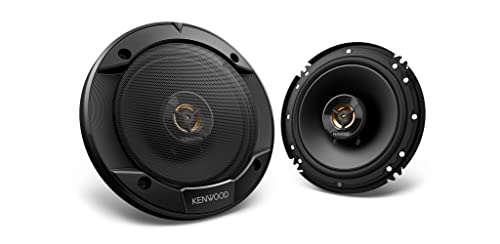
The Kenwood KFC-1666R is a straightforward 6.5-inch coaxial pair aimed at drivers who want a reliable OEM replacement without overcomplicating the installation process. Kenwood positions these in their Road Series, suggesting a focus on durability alongside everyday listening performance. The shallow depth and lower tweeter height are practical design choices that reduce fitment headaches in tight door cavities. These can be mounted as front or rear speakers, adding flexibility for multi-speaker setups.
Verified Specifications
| Specification | Value |
|---|---|
| Speaker Size | 6.5 inches |
| Peak Power | 300W |
| RMS Power | 30W |
| Frequency Response | 40 Hz – 22,000 Hz |
| Impedance | 4 ohms |
| Woofer Material | Cloth cone |
| Tweeter Type | Balanced dome |
Key Features and Practical Benefits
The cloth woofer cone is notable at this price tier. Cloth tends to be lighter than polypropylene in some designs, which can contribute to more natural-sounding midrange reproduction, though cone material alone does not guarantee a particular sound character. The balanced dome tweeter is a common and well-regarded tweeter style for coaxial speakers, generally associated with smooth, extended high-frequency output rather than a harsh or peaky top end.
The heavy-duty magnet design is cited by Kenwood as a durability and installation feature, contributing to a stable mount and consistent magnetic gap for the voice coil. The included grilles provide real-world protection from accidental contact and keep the installation looking clean, which is a practical benefit often overlooked at budget pricing. The 4-ohm impedance is a standard match for most factory head units and aftermarket receivers, reducing the risk of compatibility issues.
Documented Advantages and Trade-Offs
The 40 Hz – 22 kHz frequency response is a wide advertised range for a budget coaxial, extending reasonably low into bass territory. The 30W RMS rating is modest and honest — it reflects real continuous power handling, which is more meaningful for daily use than the 300W peak figure. Buyers running a factory head unit will find 30W RMS a realistic match for typical OEM output. However, those pairing these speakers with a dedicated amplifier should note the RMS ceiling and size the amp accordingly to avoid distortion.
The shallow mount depth is a genuine practical advantage for vehicles with limited door depth, but specific mount depth measurements are not listed in the supplied product data, so buyers with unusually shallow doors should verify fitment before purchasing. Grilles are included, which the KFC-1666S also offers, making this a feature shared across Kenwood’s budget lineup rather than a differentiator.
Who Should Consider It
The KFC-1666R suits drivers replacing worn OEM speakers on a budget who want a recognized brand, a complete out-of-box package with grilles, and the flexibility to use the speakers front or rear. It is a sensible pick if you prefer a cloth woofer over polypropylene and want a balanced dome tweeter for smoother highs. Listeners running purely factory power will find the 30W RMS rating an appropriate match.
Setup and Everyday Use
Kenwood advertises shallow depth and lower tweeter heights as installation aids, which generally means fewer conflicts with window regulators and inner door panels — a common problem point with 6.5-inch replacements. Grilles are included in the box, so you will not need to source them separately. As with any coaxial car speaker installation, confirming the mounting hole diameter and depth clearance for your specific vehicle before ordering is always recommended, as advertised ease of installation applies to most common fitments but not every vehicle.
Skar Audio TX65 6.5" 200W 2-Way Elite Coaxial Car Speakers, Pair

The Skar Audio TX65 is a 6.5-inch 2-way coaxial pair from a brand that has built its reputation in the subwoofer and amplifier market before expanding into full-range speakers. These are marketed under the TX Elite Series, and at 200W peak for the pair, they are spec’d more conservatively than the 300W-per-speaker peak figures claimed by the Kenwood and JVC options in this group. That said, the 100W RMS for the pair — meaning 50W RMS per speaker — is a more useful number for real-world comparisons and is clearly stated in the product data.
Verified Specifications
| Specification | Value |
|---|---|
| Speaker Size | 6.5 inches |
| Peak Power (Pair) | 200W |
| RMS Power (Pair) | 100W |
| Tweeter Type | 1-inch silk dome |
| Impedance | 4 ohms |
| Frequency Response | 45 Hz – 20,000 Hz |
| Sensitivity | 89 dB |
| Voice Coil | 1.25-inch copper |
| Surround Material | TPE (thermoplastic elastomer) |
| Magnet Type | Ferrite |
Key Features and Practical Benefits
The silk dome tweeter is the TX65’s most notable material distinction in this comparison. Silk dome tweeters are widely regarded in audio circles for producing a warmer, less fatiguing high-frequency character compared to PEI (polyetherimide) dome tweeters, though perceived sound quality always depends on the full system context. For listeners who spend long commutes with the music on, a silk dome may be worth prioritizing.
The TPE surround is a durable synthetic material with good resistance to temperature extremes — relevant in a car environment where dashboards and doors can see significant heat swings. The 1.25-inch copper voice coil is a specific detail that indicates reasonable heat dissipation capacity for a budget speaker. The ferrite magnet is a standard budget-tier magnet type, functional and cost-effective, though it is heavier than neodymium alternatives used in higher-end designs.
Documented Advantages and Trade-Offs
The 89 dB sensitivity rating is the lowest among the five speakers in this guide — the JVC CS-J620 is listed at 92 dB and the Kenwood KFC-1666S at 90 dB. In practical terms, a lower sensitivity speaker requires slightly more amplifier power to reach the same volume level, which is a minor but real consideration for buyers running a low-output factory radio. Paired with a dedicated amplifier, this difference becomes largely academic.
The 100W RMS for the pair (50W per speaker) is a higher per-speaker RMS figure than the Kenwood or JVC models in this group, which are each listed at 30W RMS per speaker. This makes the TX65 a better candidate for use with an external amplifier. The frequency response tops out at 20,000 Hz rather than the 22,000 Hz listed for the Kenwood and JVC options — a difference that is generally inaudible to most adults but worth noting for completeness. Grilles are not mentioned in the supplied product data for the TX65, which buyers should confirm before purchasing if grilles are important for their installation.
Who Should Consider It
The TX65 is the right choice for buyers who plan to add an amplifier now or in the future, appreciate a silk dome tweeter for its sonic character, and want clearly stated RMS power handling. It is also a good fit for anyone in the Skar Audio ecosystem who already owns one of their amplifiers and wants a matched, brand-consistent system. Buyers running a stock head unit with no plans for amplification should weigh the 89 dB sensitivity against the alternatives.
Setup and Everyday Use
The product data confirms this is a pair of 6.5-inch coaxial speakers with standard 4-ohm impedance, compatible with the vast majority of aftermarket and factory head units. Installation specifics such as mounting depth are not listed in the supplied data, so verifying fitment for your vehicle model is advisable before purchase. Because the RMS rating is stated per pair rather than per speaker, confirm your amplifier’s per-channel output aligns with the 50W RMS per speaker figure when building an amplified system.
JBL Stage 3637F

The JBL Stage 3637F is a 6.5″ three-way coaxial speaker aimed at drivers who want a recognizable audio brand at a budget-friendly price point. Its three-way design sets it apart from the 2-way coaxial speakers in this guide, meaning it uses an additional driver to cover the midrange frequency band separately from the woofer and tweeter. That configuration can deliver more defined midrange detail—vocals and instruments—compared with a standard 2-way setup. It ships without a grille, so buyers who want speaker protection should plan for that separately.
Verified Specifications
| Specification | Value |
|---|---|
| Speaker Size | 6.5″ |
| Configuration | Three-way coaxial |
| Tweeter Type | Edge-driven dome tweeter |
| Woofer Cone | Plus One woofer cone (larger surface area) |
| Basket Design | Vented basket frame |
| Color | Black |
Key Features and Practical Benefits
JBL’s “Plus One” woofer cone technology is the headline engineering claim here. According to the product listing, the larger cone surface area increases overall efficiency by up to 2 dB compared with a standard cone, which can translate to noticeably louder output from the same power input—a meaningful advantage when running speakers off a factory head unit without an external amplifier. More efficiency means your factory stereo doesn’t have to work as hard to achieve satisfying volume levels.
The edge-driven dome tweeter is described as delivering a broader and smoother high-frequency response compared with a conventional center-mounted tweeter. This design choice affects the dispersion pattern of high frequencies inside the cabin, potentially producing a wider soundstage. The vented basket frame is a practical thermal management feature; the listing states it helps cool the voice coils, which supports long-term reliability during extended listening sessions or in warmer climates.
Documented Advantages and Trade-Offs
The three-way configuration is a genuine differentiator at this price tier—none of the other speakers in this guide are three-way designs. More drivers handling distinct frequency ranges can improve sonic separation and reduce the strain any single driver handles. However, the listing does not specify peak or RMS power ratings, impedance, frequency response range, or sensitivity in decibels, so direct apples-to-apples comparisons with the JVC, Kenwood, and Skar models on those technical points are not possible from the supplied data. The absence of a grille is a real practical consideration; the other speakers in this guide include grilles, which protect cones from minor impacts and fingers.
Who Should Consider It
The JBL Stage 3637F suits buyers who prioritize brand reputation and the potential sonic benefits of a three-way design over having a full spec sheet to compare. It is a reasonable choice for someone upgrading from factory speakers who wants strong output efficiency without an amplifier, and who is comfortable sourcing a separate grille if cone protection matters to them. JBL’s positioning in the audio market also makes this a credible gift option for someone who recognizes the brand name.
Setup and Everyday Use
The listing states these speakers are “Engineered to Fit,” which suggests they are sized for common OEM 6.5″ mounting locations, though buyers should verify fitment for their specific vehicle make and model before purchasing—fitment databases provided by retailers like Crutchfield or the vehicle’s door panel specs are reliable starting points. Because no grille is included, installation finishing will look different from the other options in this guide unless you source a compatible aftermarket grille. Standard coaxial installation tools and basic wiring knowledge are generally sufficient for a job like this, but consult a professional installer if you are unsure about your vehicle’s door panel removal process.
Detailed Buying Guide for Best Budget Car Speakers
Replacing factory car speakers is one of the most cost-effective audio upgrades you can make, but not every affordable speaker suits every car or listener. Before purchasing, consider these practical factors so you buy the right speaker the first time.
Speaker Size and Vehicle Fitment
All five speakers reviewed here are 6.5-inch coaxial units, which fit the most common factory locations in US cars, trucks, and SUVs. That said, “fits 6.5-inch” is not a universal guarantee. Mounting depth, cutout diameter, and mounting hole spacing vary by vehicle year, make, and model. Always measure your door or rear deck cavity before ordering, and consult a speaker-fitment guide or your vehicle owner’s manual. The JVC CS-J620’s shallow top mount depth of 1-23/32 inches is specifically mentioned as a design feature to avoid window tracks — a genuinely useful detail for vehicles with shallow door cavities.
Sensitivity Rating
Sensitivity (measured in dB) tells you how loud a speaker gets from a given power input. Higher sensitivity means the speaker produces more volume from your factory head unit, which typically outputs 15–22 watts RMS per channel. Among the five speakers here, the JVC CS-J620 leads with 92 dB, the Kenwood KFC-1666S sits at 90 dB, and the Skar Audio TX65 is rated at 89 dB. The JBL Stage 3637F and Kenwood KFC-1666R do not have sensitivity ratings listed in the supplied product data. If you are running a factory stereo without an external amplifier, prioritizing a higher sensitivity rating is a smart move. If you plan to add an amplifier, sensitivity becomes less critical. You can learn more about how amplifiers interact with car audio components by reading this guide on connecting a 4-channel car amplifier with crossover wiring.
RMS Power vs. Peak Power
Manufacturers often advertise peak power — the JVC, both Kenwoods, and the JBL all list 300W peak — but RMS (continuous) power is what matters for day-to-day listening. Higher RMS means the speaker can handle sustained power without distorting or overheating. The JVC CS-J620 and Kenwood KFC-1666R each list 30W RMS per speaker. The Skar Audio TX65 lists 100W RMS for the pair (50W per speaker), which is notably higher if accurate. Always match the speaker’s RMS rating to your amplifier or head unit’s actual output to avoid damage or chronic distortion.
Coaxial vs. Three-Way Design
Four of the five speakers here are 2-way coaxial designs, meaning a woofer and tweeter are mounted on a single frame. The JBL Stage 3637F is a 3-way design, adding a midrange or additional tweeter element between the woofer and high-frequency driver. Three-way designs can theoretically deliver better frequency separation, especially for vocals and instruments in the midrange band. However, real-world performance differences at budget price points depend heavily on the quality of crossover components built into the speaker. Neither design is categorically superior in every listening environment.
Woofer and Tweeter Materials
Cone and dome materials affect both sound character and durability. The JVC CS-J620 uses a mica cone woofer, which tends to be rigid and efficient. Both Kenwood models use polypropylene or cloth woofer cones with treated cloth surrounds — softer materials that often produce warmer, smoother bass. The Skar TX65 features a TPE surround and a 1.25-inch copper voice coil. Tweeter materials vary too: three of the five speakers use a 1-inch PEI (polyetherimide) dome tweeter, while the Skar TX65 uses a silk dome tweeter, which is commonly preferred for smoother high-frequency response. The JBL Stage 3637F uses an edge-driven dome tweeter for broader high-frequency dispersion according to its product listing.
Included Accessories and Grilles
Small details matter during installation. The JVC CS-J620 includes speaker wire extension cables, screws, and mounting tabs — genuinely useful for cars that need minor modification. Both Kenwood models include grilles. The JBL Stage 3637F specifically states “No Grill” in its title, which is worth factoring in if grill protection matters for your installation location. The Skar Audio TX65 listing does not specify included accessories beyond the pair of speakers.
Installation, Assembly, and First-Time Setup
Installing 6.5-inch coaxial speakers is a manageable DIY project for most car owners, though difficulty varies by vehicle. Always disconnect the negative battery terminal before starting any speaker installation to prevent electrical shorts. Consult your vehicle’s service manual or a vehicle-specific forum for door panel removal steps, since panel clips and wiring harness connectors differ widely.
Once the door panel is removed, you will typically find the factory speaker held in place by two to four screws. Remove those screws, disconnect the factory wiring connector or speaker wire leads, and set the factory speaker aside. Factory wiring connectors usually require an adapter harness to mate cleanly with aftermarket speaker terminals — these adapters are vehicle-specific and sold separately. Using the correct adapter avoids cutting factory wiring, which preserves resale value and reduces the risk of wiring errors.
Before mounting the new speaker, check the mounting depth against your door cavity. The JVC CS-J620’s shallow mount depth is designed to help clear window mechanisms — a useful feature to verify on your specific door. Thread the speaker wire through the mounting location, connect the leads observing correct polarity (positive to positive, negative to negative), and gently seat the speaker into the mounting location. Use the supplied screws or your vehicle’s original screws if they fit. If your replacement speakers come with grilles, snap or screw them in place after confirming the speaker sits flush.
After installation, reconnect the battery and test each speaker individually by playing music at low volume first, then gradually increasing to check for rattles, buzzing, or distortion. A buzzing sound often indicates the speaker is contacting the door panel or an internal obstacle. If one channel produces no sound, recheck the wire polarity and connections at the head unit or amplifier. If your speakers cut in and out intermittently, loose terminal connections are the most common cause — a problem covered in detail in this guide on fixing car speakers that cut in and out.
The manufacturer’s included installation instructions always take precedence over general guidance. If your vehicle requires significant modification — such as cutting a larger hole or fabricating a mounting bracket — consider professional installation to avoid damaging the door structure.
Maintenance and Common Troubleshooting
Budget car speakers require minimal ongoing maintenance, but a few practices extend their usable life. Avoid sustained high-volume listening that pushes the speaker beyond its RMS power rating — this is the most common cause of premature woofer and tweeter failure. Distortion at high volumes is an early warning sign; reduce the volume before damage becomes permanent.
Keep speaker grilles in place whenever possible, since they protect the cone and tweeter from physical contact and debris. If a grille is missing or not included (as with the JBL Stage 3637F), be mindful of placing objects near the speaker opening. Inspect rubber surrounds annually for cracking or separation, particularly in climates with extreme heat or cold, as surround deterioration causes audible distortion and reduced bass output.
Common troubleshooting issues include one-sided sound loss, intermittent audio, or distorted output. One-sided loss usually points to a disconnected terminal, a blown fuse, or a failed speaker — test by swapping the left and right channels at the head unit to isolate the problem. Intermittent audio in both channels often traces back to the head unit, amplifier, or signal cables rather than the speakers themselves. Distortion at moderate volumes can indicate impedance mismatch, clipped amplifier output, or physical damage to the cone or voice coil.
If you have an equalizer in your system and notice harsh or unnatural vocals, adjusting the upper midrange frequencies can resolve the issue without replacing hardware. This overview of how to turn down vocals on a car amp covers practical equalization steps worth reviewing before assuming a speaker is defective.
Frequently Asked Questions
Will these 6.5-inch speakers fit my car without modification?
Most 6.5-inch speakers fit the most common factory locations in US vehicles, but fit is never guaranteed without checking your specific vehicle’s mounting depth, cutout diameter, and mounting hole pattern. Use a vehicle-fitment tool or your owner’s manual to confirm before purchasing. The JVC CS-J620’s shallow mount depth is specifically highlighted as a fitment advantage for vehicles with tight door cavities.
Can I install these speakers with a factory head unit?
Yes. All five speakers in this guide carry 4-ohm impedance, which is compatible with most factory and aftermarket head units. However, factory head units typically output 15–22W RMS per channel. Speakers with higher sensitivity ratings, such as the JVC CS-J620 at 92 dB, will produce more volume from that limited power than lower-sensitivity alternatives.
Do I need an amplifier to use these speakers?
An external amplifier is not required. All five speakers can be driven directly from a factory or aftermarket head unit. Adding an amplifier does allow you to use more of the speaker’s RMS power handling and can noticeably improve clarity and bass impact, but it is an optional upgrade.
What is the difference between peak power and RMS power?
Peak power is the maximum power a speaker can handle in very short bursts. RMS (root mean square) power is the continuous power level the speaker handles safely during normal listening. RMS is the more meaningful number when matching speakers to an amplifier or head unit. The Skar Audio TX65 lists 100W RMS for the pair (50W per speaker), while the JVC CS-J620 and Kenwood KFC-1666R each list 30W RMS per speaker.
Is a 3-way speaker better than a 2-way speaker at budget prices?
Not necessarily. A 3-way design like the JBL Stage 3637F adds a dedicated midrange or additional tweeter driver, which can improve frequency separation — but the quality of the built-in crossover network matters just as much as driver count. A well-tuned 2-way coaxial speaker can outperform a poorly designed 3-way at comparable price points.
Which speaker is best if I want cleaner highs?
Tweeter material is the key variable here. The Skar Audio TX65 uses a silk dome tweeter, which is widely associated with smoother, less fatiguing high-frequency output. The JVC CS-J620 and both Kenwood models use PEI dome tweeters, which tend toward a brighter, crisper sound. The JBL Stage 3637F uses an edge-driven dome tweeter designed for broader dispersion. The “best” choice depends on your personal preference and musical taste. For a deeper look at what separates quality tweeter designs, this overview of what makes 1-inch car audio tweeters sound clear provides useful context.
Do I need to buy an adapter harness?
In most cases, yes. Factory wiring connectors are vehicle-specific and rarely match aftermarket speaker terminals directly. A plug-and-play adapter harness for your vehicle preserves the factory wiring and makes installation cleaner. These are sold separately and are not included with any of the five speakers listed here based on the supplied product data.
Can these speakers handle a subwoofer in the same system?
Yes — coaxial speakers and a subwoofer can coexist in the same system. The coaxial speakers typically handle midrange and high frequencies, while the subwoofer covers deep bass. Crossover settings on your head unit or amplifier help each component work within its optimal range. If your amplifier only has speaker-level outputs, this guide on connecting a subwoofer to a car amp with speaker-level outputs explains the wiring options clearly.
Final Verdict
All five speakers in this guide represent solid value at the budget end of the car audio market, each with distinct strengths. The JVC CS-J620 stands out for its high 92 dB sensitivity and shallow mount depth, making it a strong choice for factory-stereo installs in vehicles with tight door cavities. Both Kenwood models offer reliable brand engineering and included grilles. The Skar Audio TX65’s silk dome tweeter and higher listed RMS handling appeal to listeners prioritizing smooth highs or planning to add an amplifier. The JBL Stage 3637F’s three-way design and Plus One cone technology offer a different sonic approach worth considering. Match your choice to your vehicle fitment, power source, and listening preferences rather than spec numbers alone.