Car speakers that cut in and out are one of the most frustrating audio problems you can deal with — especially when the issue comes and goes unpredictably. The good news is that most intermittent speaker problems come down to a handful of common causes, and many of them are fixable without a trip to a shop.
Car speakers that go in and out are almost always caused by a loose or corroded wire connection, a failing head unit, a weak amplifier signal, or a damaged speaker coil. Start by checking all wiring connections at the speaker, head unit, and amplifier. If connections are secure and clean, the problem is likely a failing component — either the speaker itself, the amp, or the head unit.
Why Intermittent Speaker Problems Are Tricky to Diagnose
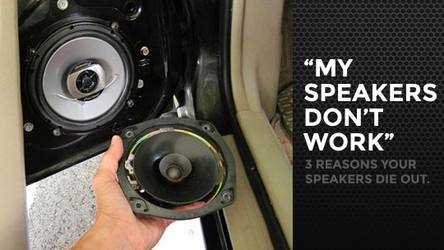
The word “intermittent” is what makes this repair frustrating. The problem often disappears right when you try to find it. Speakers that cut out only when the car warms up, only at high volume, or only over bumps are pointing to very different root causes.
Heat, vibration, and electrical load all stress audio system components in different ways. A connection that works fine at rest might fail completely once the car reaches operating temperature or hits a rough road. Paying attention to when the problem occurs is one of the most useful diagnostic clues you have.
Common Causes of Car Speakers Cutting In and Out
Before grabbing any tools, narrow down the likely cause based on the symptom pattern:
| Symptom Pattern | Most Likely Cause |
|---|---|
| Cuts out over bumps or rough roads | Loose wire or broken speaker cone |
| Cuts out after driving a while | Heat-related connection failure or failing amp |
| Only one speaker drops out | Loose connection at that speaker or bad channel |
| All speakers drop out simultaneously | Head unit, amplifier, or ground fault |
| Cutting out at high volume | Underpowered or overloaded amplifier |
| Crackling or static before cutting out | Corroded connection or worn voice coil |
Tools and Materials You’ll Need
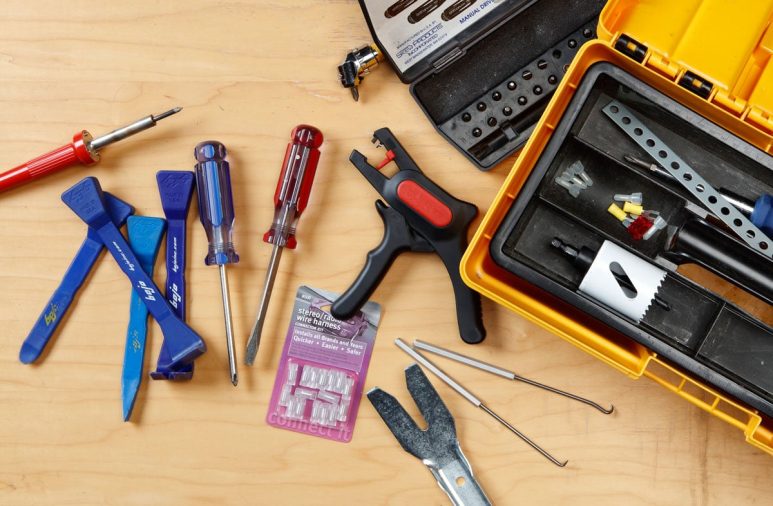
Most of the diagnostic work requires only basic tools:
- Multimeter (to test voltage and continuity)
- Trim removal tools or a flat-blade screwdriver with tape over the tip
- Electrical contact cleaner
- Dielectric grease or electrical contact grease
- Wire strippers and crimping connectors
- Sandpaper or a small wire brush (for corrosion)
For speaker replacement, you’ll also want a set of Phillips and Torx screwdrivers, depending on your vehicle’s speaker mounting hardware.
Step-by-Step: How to Track Down the Problem
Step 1 — Wiggle Test While Playing Audio
With your audio playing at a moderate volume, gently wiggle the wiring harness behind the head unit. Then wiggle each speaker door panel near the corner where wiring passes through. If the audio cuts in or out when you wiggle a specific area, you’ve found your problem zone.
This test also applies to the wiring at the amplifier if your vehicle has one. Intermittent contact here is a very common cause that many owners overlook.
Step 2 — Inspect Speaker Wiring Connections
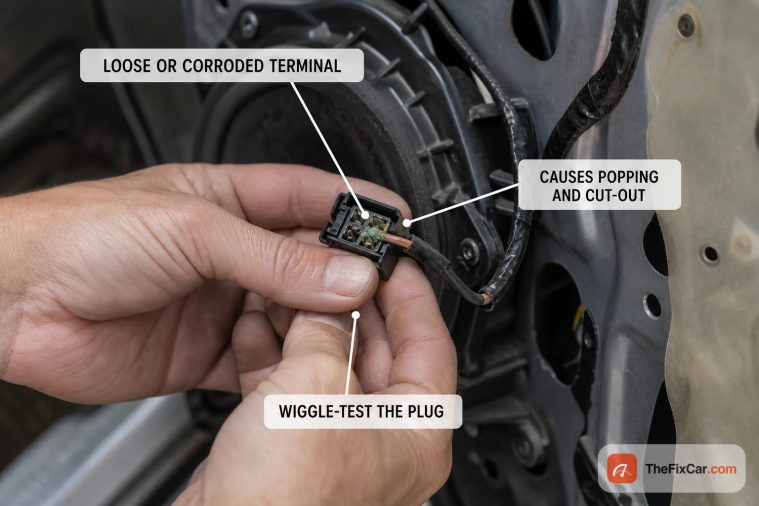
Remove the speaker from its mounting location — typically behind a door panel or dash trim piece. Speaker connections use either push-on blade connectors or spade terminals. These can loosen over time, especially in high-vibration areas like doors.
Unplug each connector, inspect the terminal for corrosion or bent contact points, and clean them with electrical contact cleaner. Reconnect firmly. A loose push-on terminal that appears connected can actually have almost no real contact.
Step 3 — Check the Speaker Wire for Damage
Speaker wire running through door jambs takes repeated flexing every time the door opens and closes. Over time, the individual strands inside the insulation can break. Externally, the wire may look fine.
Use a multimeter set to continuity mode and test the wire end-to-end while flexing it. If continuity drops out during flexing, the wire is internally broken and needs to be replaced. This is a commonly reported cause of intermittent speaker problems in older vehicles with high door-cycle counts.
Step 4 — Test the Speaker Itself
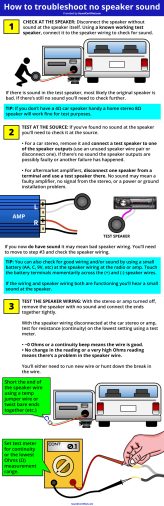
Disconnect the suspect speaker and connect it directly to a known-good audio source using short test leads. If it works perfectly with a direct connection, the speaker is fine and the problem is upstream — in the wiring or the head unit.
If the speaker still cuts out or produces distorted sound when connected directly, the speaker itself is likely failing. A worn or partially separated voice coil is a common cause of intermittent dropouts, especially in speakers that have been pushed hard at high volume levels over the years.
Step 5 — Check the Ground Connection
A poor ground is responsible for more audio system problems than most people expect. If your vehicle has an aftermarket amplifier, locate its ground connection (usually a heavy-gauge wire bolted to bare metal on the chassis). Corrosion or a loose bolt here can cause all channels to drop out, often in a heat-dependent pattern.
Clean the ground contact point down to bare metal, apply a thin layer of dielectric grease to prevent future corrosion, and torque the bolt firmly.
Step 6 — Inspect the Head Unit
If wiggling the wiring harness behind the head unit causes the problem, remove the unit and inspect the wiring harness connector pins. Bent or pushed-back pins in the connector are a known issue with factory and aftermarket head units alike.
A failing head unit can also produce intermittent audio dropouts on its own. If you’ve confirmed all wiring and speakers are sound, swapping in a known-good head unit — or having the current one bench-tested — is the next logical step.
Amplifier-Related Dropouts
Vehicles with aftermarket or factory amplifiers add another potential failure point. Many factory amplifiers go into thermal protection mode and shut down briefly when they overheat — this often presents as all speakers going silent for a few seconds, then returning.
If this matches your experience, check that the amp has adequate airflow around it and isn’t mounted in a confined space without ventilation. Also verify that the power wire gauge matches the amplifier’s current draw requirements. An undersized power wire increases resistance and can cause voltage drops that trigger shutdowns.
When the Problem Is Heat-Dependent
Speakers or connections that only fail after the car warms up are almost always experiencing thermal expansion problems. Metal expands when heated, which can cause a marginally connected terminal to lose contact at operating temperature but appear fine when the car is cold.
In practice, this symptom points strongly to a corroded terminal, a hairline break in speaker wire, or a solder joint inside the head unit or amplifier that has developed a cold solder crack. The fix is to clean all connections, reseat all terminals, and if the problem persists, have the amp or head unit inspected by a car audio technician.
Replacing a Failed Speaker
If the speaker itself is the confirmed problem, replacement is usually straightforward for most positions — front doors, rear doors, and dash speakers. Speaker sizing and impedance (measured in ohms, typically 4Ω for most factory speakers) must match the original or be compatible with your amplifier.
Measure the speaker opening diameter before purchasing a replacement. Common factory sizes include 6.5 inches, 5.25 inches, 6×9 inches, and 3.5 inches for dash speakers, but these vary significantly by vehicle make, model, and model year. A vehicle-specific fit guide from the speaker manufacturer will confirm compatibility.
The Rockford Fosgate R165X3 Prime 6.5″ full-range speaker is a widely available option that fits many common factory speaker locations and is worth checking for compatibility with your vehicle. For budget-conscious replacements, the BOSS Audio Systems BRS65 is a popular entry-level choice used in many straightforward factory swap applications.
Safety Notes for Electrical Work
Disconnect the negative battery terminal before removing any audio components if you’ll be working near the head unit, amplifier, or any wiring beyond simple connector swaps at the speaker itself. This prevents accidental short circuits that can damage your vehicle’s electronics.
Avoid splicing speaker wires using twist-and-tape connections. These fail quickly from vibration and corrosion. Use proper crimp connectors or solder and heat-shrink tubing for any wire repairs.
FAQ
Why do my car speakers cut out only when I hit bumps?
Vibration-related cutouts almost always point to a loose wire connection or a physically damaged speaker. The bump physically interrupts a marginal electrical connection. Check all speaker terminals and the wiring running through the door jamb, since that wire flexes constantly and can develop internal breaks that only open up under movement.
Can a bad ground cause car speakers to cut in and out?
Yes. A failing or corroded ground connection is one of the most frequently overlooked causes of intermittent audio problems. A poor amplifier ground in particular can cause all channels to drop out simultaneously, often in a way that gets worse as the car warms up and the resistance in the corroded connection increases.
Why do my car speakers cut out at high volume but work fine at low volume?
This is almost always an amplifier issue. Running the volume high draws more current. If the amp is underpowered for the speakers, has an inadequate power or ground wire, or is beginning to fail, it will clip or shut down under load while appearing normal at low listening levels.
Is it worth repairing car speakers that go in and out, or should I replace them?
If the problem is a wiring connection or ground issue, repair is almost always worthwhile and inexpensive. If the speaker itself has a failing voice coil or cone separation, replacement is typically the better call — repairing speaker internals is rarely practical. A replacement speaker in many common sizes costs between $20 and $80 for a solid entry-level option.
Why do all my car speakers cut out at the same time?
When all speakers drop out simultaneously, the problem is shared — meaning the head unit, amplifier, or a common power or ground connection is the likely culprit. A single bad speaker or wire only affects that channel. Start at the amplifier ground and head unit wiring harness when all channels are affected.
Can cold or hot weather cause car speakers to go in and out?
Temperature extremes can accelerate connector corrosion and cause marginal connections to fail. Cold weather makes plastic connectors brittle, which can crack the housing. Heat causes thermal expansion that opens up marginal contacts. If your speaker problem is clearly weather-dependent, focus your inspection on all electrical connections in the audio signal path.
How long does it take to diagnose and fix intermittent car speaker problems?
Simple connection issues — a loose terminal or corroded connector — can be found and fixed in 30–60 minutes with basic tools. Speaker replacement typically takes 1–2 hours depending on the location and whether trim panels are difficult to remove. Amplifier or head unit failures take longer to confirm and may require professional diagnosis if the fault is internal to the component.
Intermittent speaker dropouts almost always trace back to a wiring or connection issue rather than a failed component — start there before spending money on replacements. Work through the problem systematically from the speaker outward toward the head unit, and pay close attention to when the fault occurs. A problem that only appears under heat or vibration is telling you exactly where to look.