Car seat covers seem like a simple upgrade — protect the upholstery, refresh the interior, maybe add some comfort. But a few important safety questions deserve honest answers before you buy or install one.
Car seat covers are generally safe for adult vehicle seats when they fit properly, maintain full access to seat belt buckles, and do not block side-impact airbag deployment zones. The main safety risks come from poor fitment, covers that interfere with airbags built into seat bolsters, and incompatible covers used with infant or child safety seats. Choosing a vehicle-compatible cover and installing it correctly eliminates most of these concerns.
The Airbag Compatibility Problem Most Buyers Miss
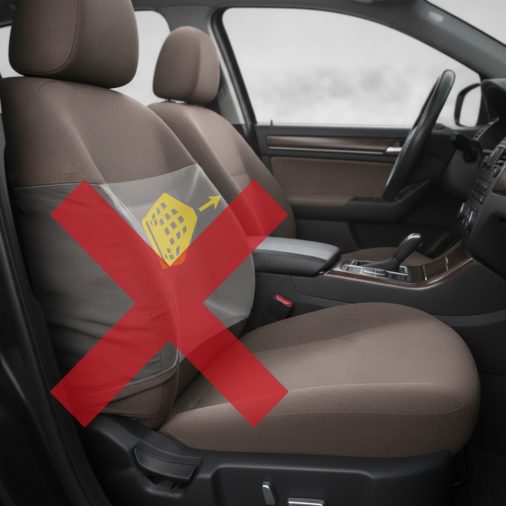
Many modern vehicles — particularly those built after the mid-2000s — have side-impact airbags integrated into the seat bolsters rather than the door panels. These seat-mounted airbags inflate outward from the outer edge of the seat back during a side-impact collision.
If a seat cover is not specifically designed for seats with side-mounted airbags, the fabric can restrict deployment, slow inflation time, or cause the airbag to direct force unpredictably. This is the most significant safety concern with automotive seat covers, and it is not one most casual buyers think to check.
Look for covers that are clearly labeled “airbag compatible” or “airbag-safe.” Many quality covers include a split seam or a purpose-built deployment channel along the side of the seat back, allowing the airbag to tear through cleanly at the correct moment. If your vehicle has seat-mounted side airbags and a cover has no such provision, avoid it regardless of how well it fits everything else.
To confirm whether your vehicle has seat-mounted airbags, check the owner’s manual or look for “SRS AIRBAG” or “SIDE AIRBAG” labels on your seat bolsters.
Seat Belt Buckle Access and Retention
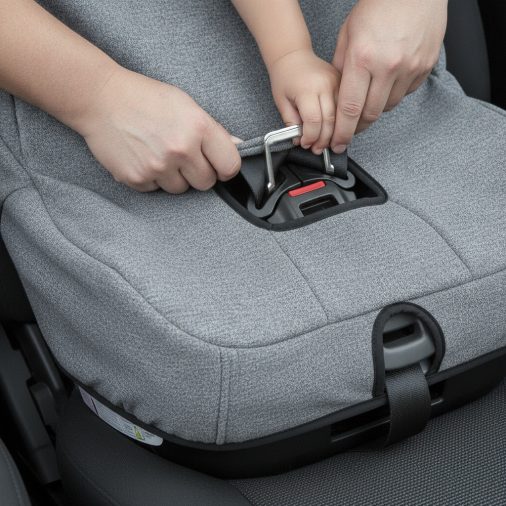
A seat cover that partially buries or shifts the position of a seat belt buckle creates a real usability and safety problem. In an emergency exit, a restricted buckle could slow the release. During normal use, a partially covered buckle is easy to miss, potentially leaving a passenger unbelted without noticing.
When installing any seat cover, confirm that:
– The seat belt buckle sits completely clear of the cover material
– The buckle does not require extra effort to latch or release
– The buckle cannot slide underneath the cover when someone sits down
– The cover’s attachment straps do not loop around or underneath the buckle anchor
Most well-designed covers route their securing straps clearly away from buckle hardware. Still, after installation, deliberately test the buckle several times before regular use.
Are Car Seat Covers Safe for Child Safety Seats?
This is where the answer changes significantly. Using an aftermarket car seat cover underneath a forward-facing or rear-facing child restraint system introduces several risks that child passenger safety technicians consistently warn against.
Child safety seats are crash-tested on bare upholstery. The friction, firmness, and contact surface between the child seat base and the vehicle seat are part of the restraint system’s calculated performance. Adding a cover changes that surface.
Specific concerns include:
– Compression: Soft or padded covers compress under load, which can affect the recline angle of an infant seat and alter head position in a crash
– Slippage: Slippery materials like leatherette reduce the grip between the child seat base and the vehicle seat, allowing more movement during a collision
– Unstable base contact: A cover with uneven padding can prevent the child safety seat from sitting flat, affecting tightness and angle
The general guidance from child passenger safety technicians is to remove aftermarket seat covers from any seating position used by a rear-facing or forward-facing child restraint unless the child seat manufacturer has specifically tested and approved that combination. If you need protection for your back seat while using child safety seats, a seat protector designed specifically to go under child restraints — and crash-tested accordingly — is the appropriate solution.
For parents researching infant car seat strap cover safety, the same principle applies: only use accessories the child seat manufacturer has explicitly approved.
Universal vs. Custom-Fit Covers — Why Fitment Affects Safety
A loosely fitting cover is more than an aesthetic problem. Excess fabric can bunch under the thighs, shift during driving, and interfere with the natural support geometry of contoured performance or sport seats. In some cases, a sliding cover can restrict driver movement or cause a distraction at the wrong moment.
Custom-fitted seat covers with tailored contours stay in place more reliably because they are cut to match specific seat profiles. They are also less likely to bunch around the airbag deployment zone or migrate over the buckle area.
Universal covers, by contrast, accommodate a broader range of seat shapes through elastic edging, adjustable straps, and tie-down hooks. They work well on many vehicles, but the safety check after installation matters more because the fitment is less precise. Always verify airbag clearance, buckle access, and cover stability after installing any universal design.
Universal car seat covers are a reasonable choice for many drivers, but they require an extra installation review compared to vehicle-specific options.
Material Choices and Their Practical Safety Implications
The material a cover is made from affects comfort but also has some bearing on safety and driver control.
Material
Airbag Seam Availability
Grip Level
Heat Management
Notes
Neoprene
Common
Moderate
Warm in summer
Durable, water-resistant
Leatherette / PU Leather
Available
Low–Moderate
Can get hot or cold
Slippery when new
Mesh / Breathable fabric
Less common
Good
Excellent
Lighter weight
Sheepskin / Fleece
Rare
Low
Warm
Not recommended under child seats
Canvas / Heavy-duty fabric
Available
Good
Moderate
Common in truck applications
Slippery materials require more attention to the securing system to prevent cover migration. Thick padded materials warrant extra review if child safety seats are in use on those positions.
For truck owners and those doing heavy-duty work, durable seat covers designed for trucks typically use materials like canvas or heavy neoprene that grip well and stay in place under daily working conditions.
Installation Mistakes That Create Safety Hazards
Even a well-designed, airbag-compatible cover can become unsafe through poor installation. Common mistakes include:
– Routing anchor straps over the seat belt buckle or under the buckle anchor
– Leaving large folds of fabric along the outer seat bolster where airbags are housed
– Overtightening under-seat hooks to the point where they snag on seat adjustment rails or wiring harnesses
– Using a cover designed for cloth seats on a heated seat without verifying heat compatibility, which can damage seat heater elements over time
– Skipping the airbag label check on the seat and assuming the cover is safe by default
Many vehicles also route wiring for seat heaters, seat occupancy sensors, or side airbag inflators along the lower seat frame. When routing attachment hooks beneath the seat, avoid snagging these components.
Heated and Ventilated Seat Compatibility
If your vehicle has factory-installed heated or ventilated seats, the cover material and thickness affect performance. A thick padded cover significantly reduces heat transfer from a heated seat, making it largely ineffective in cold weather. A non-breathable cover over a ventilated seat blocks the airflow channels entirely.
For heated seat compatibility, thinner materials such as mesh or lightweight fabric work best. For ventilated seats, breathable seat covers with open-weave construction preserve at least partial airflow benefit. Verify that the specific product you are considering is labeled as compatible with heated or ventilated seats before buying.
When Seat Covers Are Safe and Practical
Away from the specific concerns above, seat covers serve legitimate and safe protective purposes for most adult seating positions. They are particularly useful for:
– Protecting original upholstery from wear, stains, and fading to preserve resale value
– Shielding seats from dog hair, mud, and pet-related damage — covers designed for pet hair often include waterproof liners and anti-slip backing
– Improving comfort on long drives with additional padding or cooling material
– Refreshing visually worn interiors without the cost of reupholstery
The key is choosing the right cover for the specific seat and vehicle, verifying airbag compatibility before purchase, and confirming buckle access and cover stability after installation.
Frequently Asked Questions
Can car seat covers interfere with airbags?
Yes, this is a genuine risk. Seat-mounted side-impact airbags deploy through the outer seat bolster. A cover without a proper airbag deployment seam can restrict or redirect inflation force. Always confirm whether your vehicle has seat-mounted airbags — check for “AIRBAG” markings on the side of the seat back — and choose covers explicitly rated as airbag compatible for those positions.
Are car seat covers safe to use under a child car seat?
Generally, no — not without specific approval. Child safety seats are crash-tested on bare vehicle upholstery. An aftermarket cover changes the friction and stability of that surface, which can affect how securely the child seat installs and how it performs in a collision. Use a purpose-designed, crash-tested seat protector if you need under-seat protection, and confirm the child seat manufacturer approves its use.
Do seat covers affect heated seats?
Yes, thick or insulating materials significantly reduce heat transfer from factory seat heaters. Thin mesh or lightweight fabric covers have the least impact. Ventilated seat function is also reduced or blocked by non-breathable covers. Check the product description for heated and ventilated seat compatibility before purchasing.
What should I check after installing a seat cover?
After installation, confirm the seat belt buckle is fully exposed and operates without resistance. Check that no fabric bunches along the outer seat bolster where airbags may be located. Verify that under-seat attachment hooks do not contact seat adjustment hardware or visible wiring. Sit in the seat and shift positions to confirm the cover does not slide or bunch unexpectedly.
Are leatherette seat covers slippery and dangerous?
Leatherette and PU leather covers can be noticeably more slippery than factory cloth upholstery, especially when new. This affects how easily passengers slide in and out, and it can affect child seat installation grip if those surfaces are in contact with a safety seat base. Look for covers with anti-slip backing or textured surfaces if grip is a concern.
How do I know if my car has seat-mounted airbags?
Look for a label on the outer side of the seat back — typically reading “SRS AIRBAG” or “SIDE AIRBAG.” Your owner’s manual will also list the airbag locations under the safety or supplemental restraint section. If you are unsure, checking the manual is more reliable than visual inspection alone, as label placement varies by manufacturer.
Do seat covers void any vehicle warranties?
In most cases, using a seat cover does not void a vehicle warranty on its own. However, if a seat cover causes physical damage — for example, snagging a seat heater element or wiring harness — that damage may not be covered under warranty. Using covers with heated or ventilated seat systems without verifying material compatibility carries the most practical risk in this context.
Final Thoughts
Car seat covers are safe for most adult vehicle seats when they are airbag compatible, properly fitted, and installed without interfering with seat belt buckles or under-seat wiring. The two situations that require extra care are vehicles with seat-mounted side airbags — where a purpose-built deployment seam is non-negotiable — and any seating position used by a rear-facing or forward-facing child restraint, where covers under the safety seat are best avoided unless specifically crash-tested for that use. A few minutes spent checking the cover’s airbag labeling, reviewing your seat’s features, and testing buckle access after installation covers most of the safety ground worth covering.