After an accident, parents often face an unexpected question: does insurance cover replacing the child’s car seat? It’s a practical concern that catches many families off guard, especially when the seat shows no visible damage but safety experts recommend replacement anyway.
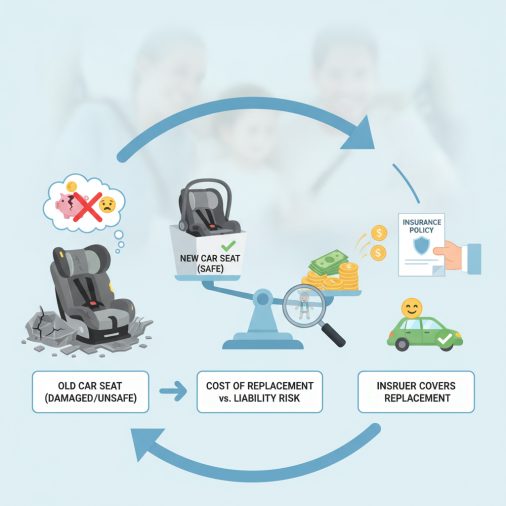
Child car seats are generally covered by auto insurance after an accident, but coverage depends on your policy type and the circumstances of the crash. Comprehensive or collision coverage typically applies, and most major insurers follow recommendations from the American Academy of Pediatrics and seat manufacturers that seats should be replaced even after moderate impacts. Your deductible applies, and coverage is not automatic — you must file a claim specifically for the seat.
What Type of Auto Insurance Covers Car Seats?
Not all auto insurance policies are equal when it comes to personal property inside the vehicle.
Collision coverage is the most relevant policy type. It covers damage to your vehicle and its contents resulting from a collision with another vehicle or object. Since a car seat is considered part of the vehicle’s safety equipment, most insurers include it under collision claims.
Comprehensive coverage applies to non-collision events such as theft, flooding, fire, or hail damage. If a car seat is stolen from your vehicle or damaged in a covered non-collision event, comprehensive coverage typically applies.
Liability-only policies generally do not cover your own vehicle’s contents or equipment. If you carry only the state minimum liability coverage, car seat replacement after your own at-fault accident would likely come out of pocket.
If the other driver caused the accident, their liability insurance may cover your car seat through a property damage claim against their policy.
Why Insurers Cover Car Seat Replacement
The reason insurers take car seat replacement seriously comes down to safety science. Car seats are engineered to absorb crash forces in a very specific way. Even when a seat appears undamaged externally, the internal structural components — the shell, harness webbing anchors, and load-bearing foam — may have experienced stress that compromises their performance in a future crash.
Major manufacturers including Graco, Britax, and Chicco all publish replacement policies recommending new seats after moderate to severe accidents. Many insurers align their coverage language with these manufacturer guidelines precisely because covering a $200–$400 seat replacement is far less expensive than disputing a claim where safety was clearly at stake.
The National Highway Traffic Safety Administration (NHTSA) provides general guidance that seats involved in moderate or severe crashes should be replaced. Some manufacturers allow seats to remain in service after minor crashes meeting specific criteria — typically defined as crashes where the vehicle could be driven away, airbags did not deploy, no occupant was injured, and the seat shows no visible damage — but the safest approach is always to confirm directly with the seat manufacturer.
How the Claims Process Works
Filing a car seat claim is straightforward but requires a few deliberate steps.
1. Document the seat immediately after the accident. Photograph the seat in place, the harness, the base, and any visible damage. Keep the original purchase receipt or look up the model number and retail price.
2. Contact your insurer and specifically mention the car seat. It will not automatically appear in your claim. Adjusters focus on vehicle damage, so you need to bring up the seat directly.
3. Get a replacement cost estimate. Insurance companies typically reimburse the current retail cost of the same or equivalent seat model. If your exact model has been discontinued, most insurers will cover a comparable replacement.
4. Ask about your deductible. Your deductible applies to the total claim. If your deductible is $500 and the car seat costs $250, filing solely for the seat may not make financial sense unless vehicle repairs are also part of the same claim.
5. Request documentation from the manufacturer if needed. Some insurers ask for written confirmation that the manufacturer recommends replacement. Most major brands offer this documentation through their customer service lines.
When the Other Driver Is At Fault
If another driver caused the accident, the situation is slightly different. You would file a third-party property damage claim against the at-fault driver’s liability insurance rather than your own collision coverage. This means your own deductible does not apply.
In practice, this process can take longer because the at-fault insurer needs to accept liability before processing property claims. Keep detailed records of the seat’s purchase price and the manufacturer’s replacement recommendation to support your claim.
If the at-fault driver is uninsured or underinsured, your own uninsured motorist property damage coverage (available in many states) may apply. Coverage varies significantly by state and policy, so review your declarations page carefully.
Minor Accident — Do You Still Need to Replace the Seat?
This is where parents often feel uncertain. A slow parking lot bump feels very different from a highway collision, and replacing a perfectly intact-looking seat seems wasteful.
NHTSA outlines a minor crash exception with specific criteria that must all be met simultaneously:
– The vehicle was able to be driven away from the crash scene
– No door nearest the car seat was damaged
– No one in the vehicle was injured
– Airbags did not deploy
– The car seat has no visible damage
If every condition is met, NHTSA suggests the seat may not require immediate replacement. However, this is a general guideline, not a guarantee. The safest step remains contacting the seat manufacturer directly — most have dedicated safety lines for exactly this question.
Many insurers will still cover replacement if you request it after even a minor accident, especially if a claim is already being filed for vehicle repairs. It is worth asking your adjuster directly.
Coverage Limits and Gaps to Know
A few practical limitations are worth understanding before assuming full reimbursement.
Depreciation. Some policies reimburse actual cash value rather than replacement cost. A three-year-old car seat may be valued at significantly less than its current retail price. Ask your insurer whether they pay actual cash value or replacement cost value for safety equipment.
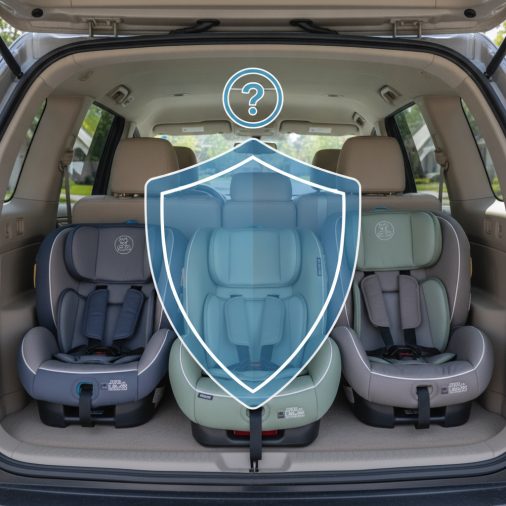
Multiple seats. Families with two or three seats installed — particularly those fitting multiple car seats across the back row — can file for all seats involved in the crash. Document each seat separately.
Seat bases. Infant car seat bases are typically covered as part of the seat system. Confirm this with your adjuster if the base was installed at the time of the crash.
Vehicle-specific fitment costs. Some families purchase seats specifically chosen for their vehicle, such as narrow car seats designed for tight rear cabins like the Jeep Wrangler. Insurance typically covers the cost of the seat itself, not any accessories.
What About Car Seat Accessories?
Car seat protector mats — the fabric or rubber pads placed between the seat and the vehicle upholstery — are generally not covered because they are accessories rather than safety components. If you use a car seat protector to guard your upholstery under a child safety seat, expect to replace that separately.
The harness, chest clip, LATCH connectors, and any manufacturer-installed components are part of the seat and would fall under a replacement claim for the seat itself.
Keeping Records That Support a Claim
Good documentation makes car seat insurance claims significantly smoother.
Keep the original purchase receipt or a digital copy. Note the model number, manufacture date printed on the seat label, and expiration date. Many families invest in crash-tested car seats that have undergone rigorous independent safety evaluations — having documentation of the seat’s original retail value helps establish fair reimbursement.
After any accident, photograph the seat from multiple angles before it is moved or replaced. Some insurers may ask to inspect the seat before issuing a reimbursement check.
FAQ
Does insurance cover a car seat if there is no visible damage?
Yes, in most cases. Leading insurers recognize that structural damage to a car seat may not be visible after a crash. Manufacturer guidelines and NHTSA recommendations both support replacement after moderate-to-severe accidents regardless of appearance. Document the crash details and contact your insurer to file a claim. Most major carriers will cover replacement cost even when the seat looks intact.
Will filing a car seat claim raise my insurance premium?
Filing an at-fault collision claim can affect your premium at renewal. Whether the car seat is included in that claim does not typically add a separate surcharge — it is part of the same claim event. If the accident was not your fault and you file against the other driver’s insurance, your own premium should not be affected, though this varies by insurer and state.
How much will insurance pay for a car seat replacement?
Reimbursement is typically based on the current retail cost of the same model or a comparable replacement. If your seat has been discontinued, the insurer should cover an equivalent seat. Policies that pay actual cash value rather than replacement cost may reduce the payout based on the seat’s age. Always confirm with your adjuster whether replacement cost or depreciated value applies.
Can I get reimbursed if I already purchased a replacement seat before filing a claim?
Generally yes, as long as you have documented the original seat and have receipts for the replacement. Inform your insurer as soon as possible after the accident. Waiting too long or disposing of the damaged seat before the insurer can inspect it may complicate your claim, so photograph everything before replacing.
Does renters insurance or homeowners insurance cover a car seat stolen from my car?
In some cases, yes. Personal property stolen from a vehicle may fall under a homeowners or renters insurance policy rather than auto insurance. Coverage depends on your policy and whether personal belongings inside the vehicle are included. Check with your insurer about which policy applies, since filing under the wrong policy can lead to delays.
Are convertible car seats covered the same way as infant seats?
Yes. Whether you are using an infant seat, a convertible car seat, or a booster seat, the coverage principle is the same. All child restraint systems are treated as safety equipment, and most insurers cover their replacement after a qualifying accident. The seat type does not change the claims process.
What if my car seat was brand new and expensive — will I get full replacement cost?
Most insurers aim to make you whole, meaning they cover the cost to replace the seat with the same or equivalent model. For top-rated infant car seats or premium models, this can mean a meaningful reimbursement. Confirm whether your policy pays replacement cost value or actual cash value, as depreciation could reduce the payout on a seat that is a few years old even if it was originally expensive.
Final Thoughts
Child car seat replacement is a legitimate and widely covered auto insurance benefit that many families do not know to claim. The key steps are documenting the seat immediately, mentioning it explicitly when contacting your insurer, and confirming whether your policy pays replacement cost or depreciated value. When the accident was the other driver’s fault, pursue the claim through their liability coverage to avoid using your own deductible. And when in doubt about whether a seat actually needs replacement after a minor crash, contact the manufacturer directly — that answer matters more than what the seat looks like.